

How to Compare Tempered Shower Doors for Your Bathroom
Tempered shower doors use safety glass made to handle everyday bathroom use. To compare them well, start with four practical checks:
- Confirm the glass is safety-rated tempered glass and choose a thickness that suits the design.
- Match the door style to the opening, such as hinged, sliding, fixed walk-in, or corner enclosure.
- Check that the walls, curb, and hardware can support the glass and contain water.
- Choose corrosion-resistant hardware crafted from solid brass or stainless steel base metals with a finish that works with your fixtures and cleaning routine.
A 34-by-72-inch clear tempered-glass screen with a black framed finish can work well in a compact shower opening, but the actual fit depends on finished wall-to-wall measurements, plumb walls, curb depth, and door-swing clearance. Clear glass creates an open look, while framed and semi-frameless systems can offer more adjustment for imperfect walls than heavy frameless glass.
I am Michael Dombek, owner of The Glass Guy of Brevard, and I have spent nearly two decades measuring, fabricating, and installing tempered shower doors and custom glass enclosures across Brevard County. In this guide, I will help you compare the details that matter before you choose a door or schedule installation.
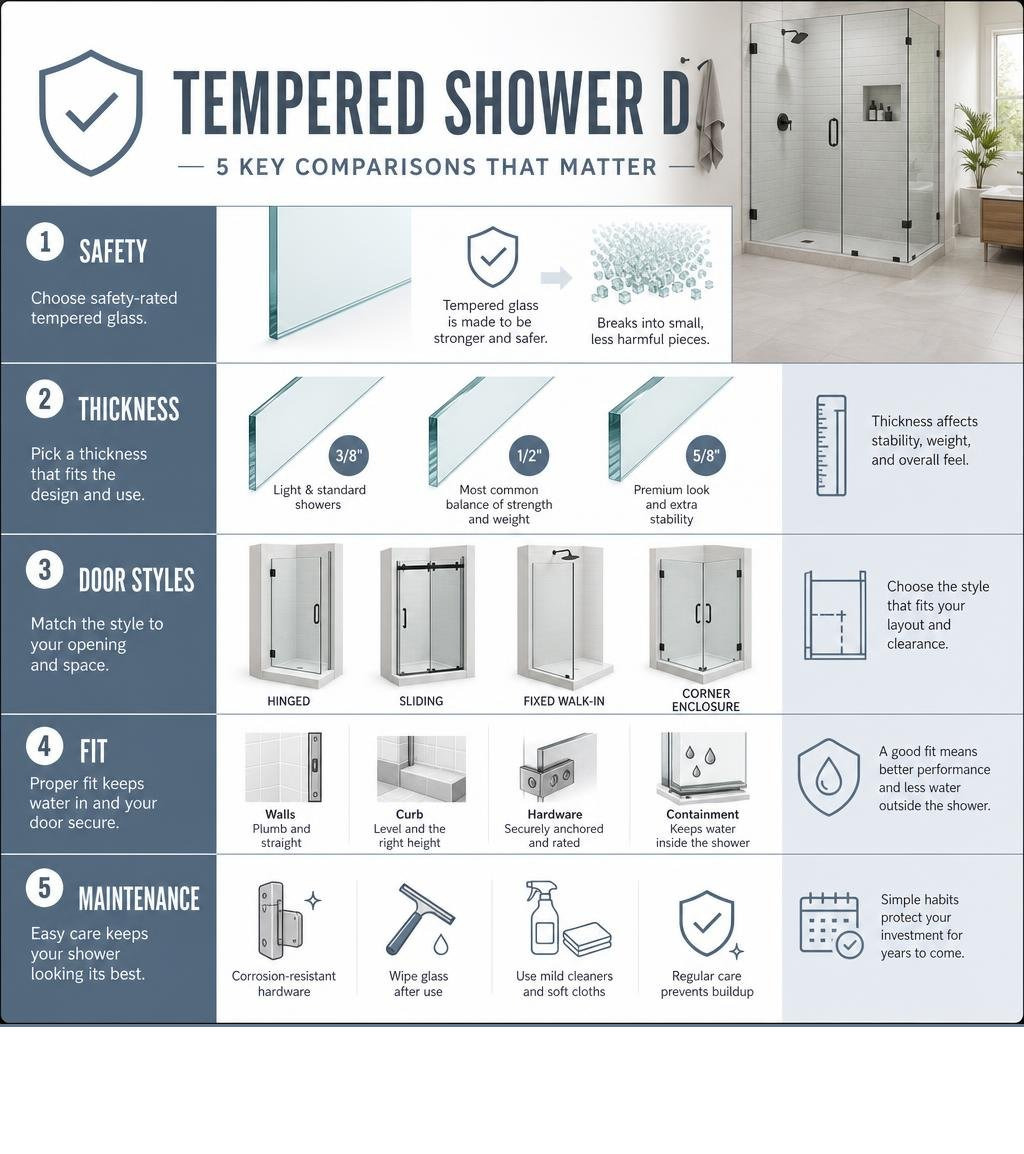
Simple guide to tempered shower doors:
Safety Glazing and Manufacturing Standards for Bathroom Enclosures
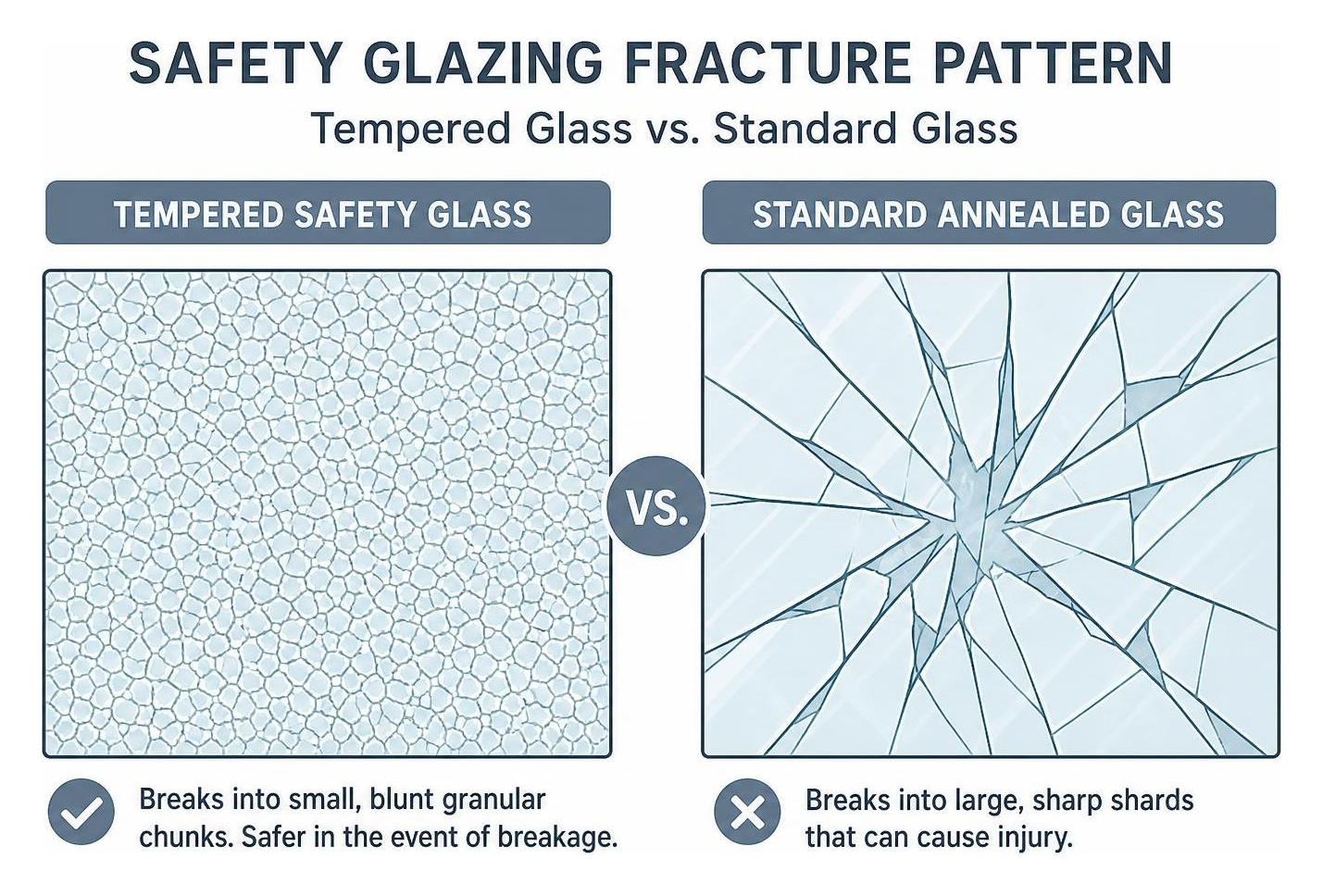
When selecting glass for your bathroom, safety is always the baseline. Standard annealed glass breaks into jagged shards under stress, making it unsafe for wet, slippery areas. In contrast, tempered safety glass is designed specifically for high-use residential bathrooms to handle daily wear and minor impacts.
If tempered glass ever experiences an impact strong enough to cause breakage, it fractures into small, blunt granular chunks rather than sharp splinters. In residential bathrooms, building codes require certified safety glazing for all wet environments. High-quality shower panels carry certification from the safety glazing certification council (SGCC), verifying that the glass satisfies rigorous impact resistance benchmarks. When Michael Dombek and our team evaluate an opening, verifying certified safety glass is always the first step to ensure long-term peace of mind in your home.
Key Factors to Evaluate When Comparing Tempered Shower Doors
Choosing the right shower door involves balancing visual appeal, daily functionality, and your bathroom layout. A door that looks great in a showroom might not function well if your bathroom has tight clearances or uneven tile work. Evaluating your options early prevents costly revisions during a remodel.
Understanding Glass Thickness Options
Glass thickness plays a significant role in the structural feel, weight, and operational smoothness of any shower enclosure. Different styles require specific thicknesses to ensure proper support and performance:
- 1/4-inch (6mm): Commonly utilized in fully framed systems and standard sliding setups. The surrounding metal channels provide the necessary rigidity.
- 5/16-inch (8mm): A popular mid-weight option for semi-frameless enclosures, offering improved heft while keeping overall weight manageable.
- 3/8-inch (10mm): The industry benchmark for heavy glass enclosures. It provides substantial rigidity, clean polished edges, and minimal flex during daily use.
- 1/2-inch (12mm): A premium heavy glass option often chosen for tall, expansive architectural panels or oversized custom enclosures that require maximum structural stability.
Heavier panels require solid structural backing in the wall framing to support hinges and brackets securely over time. Exploring frameless shower door options can help you visualize how thicker glass eliminates the need for bulky perimeter metal.
Framing Styles and Hardware Finishes
The frame style you select sets the overall tone for your bathroom design. Fully framed units feature perimeter aluminum channels around every edge, which can provide extra adjustability for out-of-plumb walls. For homeowners who want a cleaner look without going completely frameless, semi-frameless shower doors offer an excellent balance by framing the perimeter while leaving the primary door edge seamless.
Hardware finishes should complement your existing plumbing fixtures, vanity hardware, and lighting. Popular modern choices include matte black, brushed nickel, polished chrome, and satin brass. Selecting solid brass or stainless steel base hardware with high-grade, corrosion-resistant finishes helps protect against pitting and surface wear in humid Florida environments.
| Glass Thickness | Typical Enclosure Style | Structural Support Needed | Hardware Finish Options |
|---|---|---|---|
| 1/4-inch (6mm) | Fully Framed / Light Slider | Standard drywall framing / perimeter track | Chrome, Brushed Nickel, Matte Black |
| 5/16-inch (8mm) | Semi-Frameless / Bypass Slider | Standard framing with reinforced track | Brushed Nickel, Matte Black, Chrome |
| 3/8-inch (10mm) | Heavy Frameless / Hinged Door | Solid wood blocking behind wall tile | Matte Black, Brushed Nickel, Polished Chrome, Satin Brass |
| 1/2-inch (12mm) | Custom Architectural / Large Fixed Screens | Heavy-duty structural studs & deep channel | Custom finishes, Polished Chrome, Matte Black |
Evaluating Layouts, Sizing, and Installation Requirements
Every bathroom presents unique spatial challenges. Measuring the opening accurately across the bottom curb, middle, and top is vital, as walls rarely remain perfectly plumb after tile installation.
How Layout Configurations Impact Door Selection
The overall footprint of your shower determines the most functional door style for the space:
- Alcove Openings: Standard three-wall layouts work well with sliding bypass doors, single hinged doors, or fixed walk-in splash screens.
- Corner Enclosures: Two-sided glass setups typically feature a fixed return panel paired with a swinging door or sliding corner entry.
- Sliding Bypass Systems: Excellent for bathrooms where space outside the shower is limited, keeping floor walkways clear.
- Hinged and Pivot Doors: Provide a wide walk-through opening, provided there is adequate clearance away from vanities, toilets, and towel bars.
When off-the-shelf dimensions cannot accommodate unusual heights, kneewalls, or bench cutouts, custom shower glass doors provide a tailored fit that aligns cleanly with your tile lines.
Professional Alignment and Leak Prevention Measures
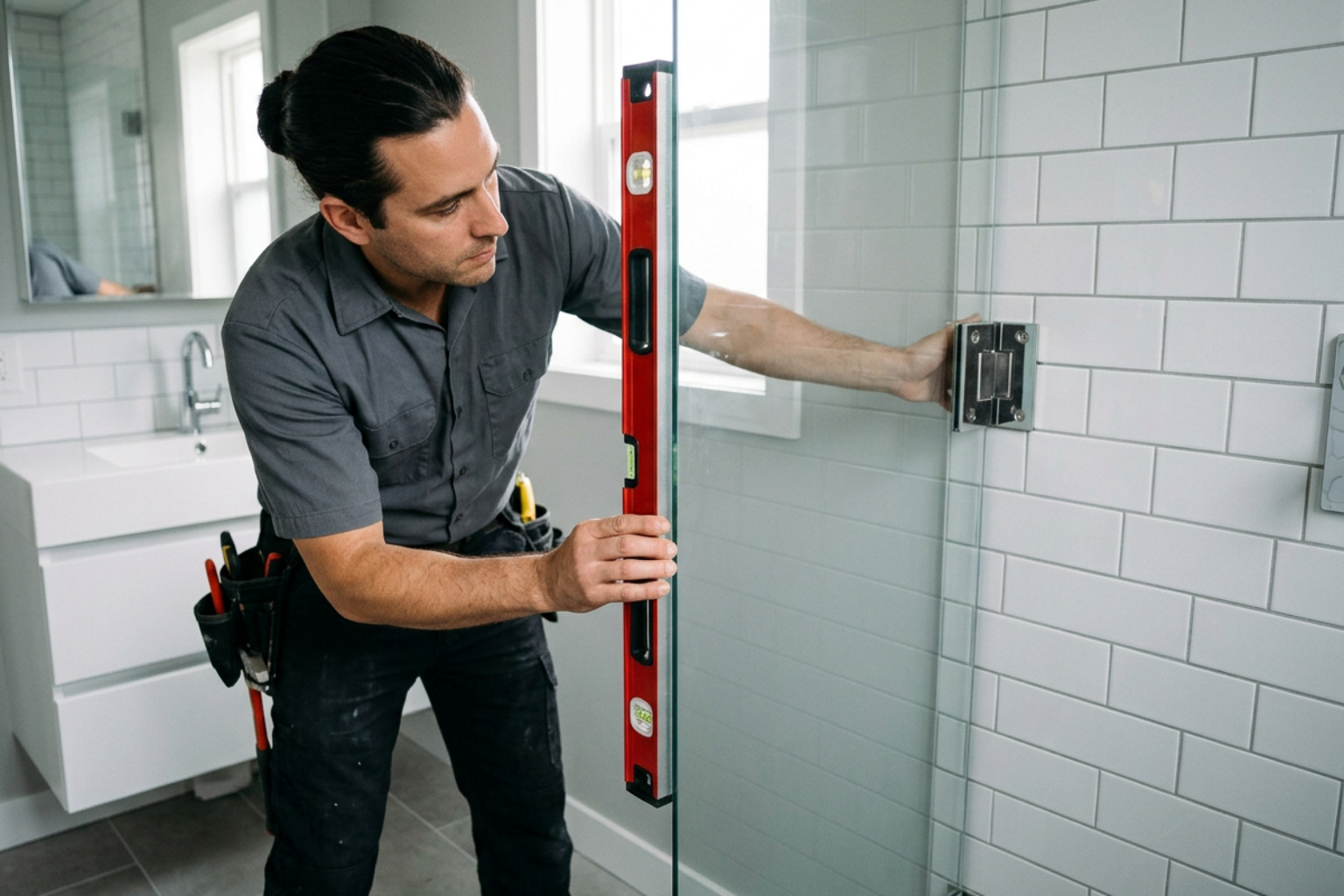
Proper alignment is essential for keeping shower water inside the enclosure where it belongs. During our visits to homes in Melbourne, Viera, and Palm Bay, we frequently see water containment problems caused by improper curb slope or poor alignment.
A professional installer checks that the threshold slopes slightly inward toward the drain, allowing water to run off naturally. In frameless and semi-frameless applications, clear polycarbonate bottom sweeps, magnetic door latches, and vertical bulb seals create a clean barrier against shower spray without detracting from the open aesthetic. Scheduling professional shower door installation ensures that heavy glass panels are securely anchored to wall studs, plumbed accurately, and sealed with high-grade silicone for reliable performance.
Maintenance Practices and Protective Glass Coatings
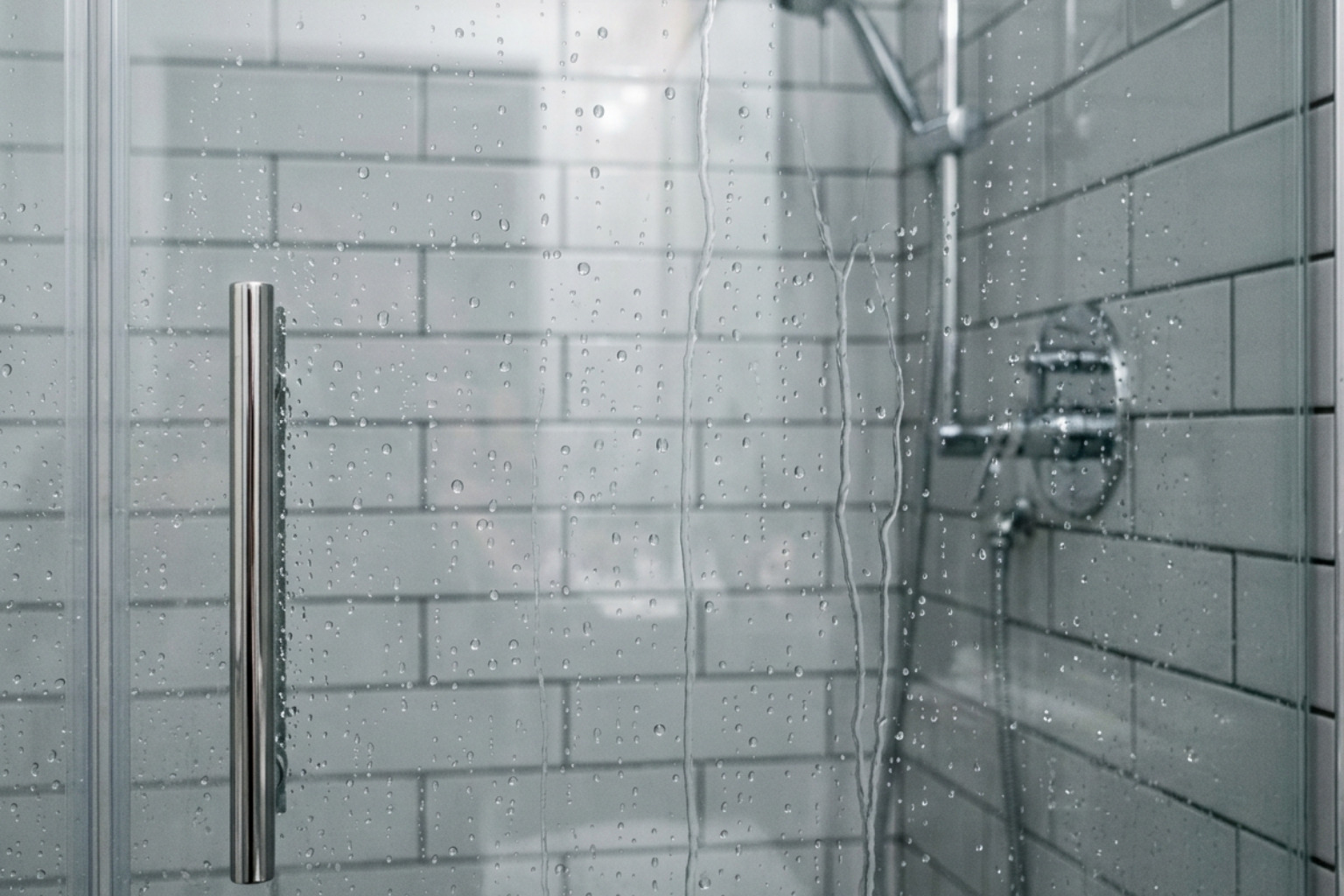
Clear glass panels showcase beautiful tile work, but hard water minerals and soap residue in Florida bathrooms can impact clarity over time if left unprotected. When comparing shower glass options, deciding between standard clear glass and factory-treated protective glass is an important purchasing choice.
Factory-applied hydrophobic surface treatments create an ultra-smooth protective barrier over the microscopic pores of the glass. This barrier causes water to bead up and roll away rather than clinging to the surface, significantly reducing mineral buildup and making everyday upkeep much simpler for homeowners.
When planning your enclosure, factor in these practical considerations:
- Glass Protection Upgrades: Choosing factory-sealed glass helps minimize water spotting and keeps clear panels looking pristine with minimal effort.
- Hardware Care: Selecting solid brass or stainless steel base metals with protective finishes designed for humid coastal environments helps prevent tarnishing and mineral accumulation around handles and hinges.
- Cleaner Compatibility: Opting for mild, non-abrasive care products preserves both protective coatings and decorative metal finishes over time.
For more insights on choosing the right glass and configuration for your home, our shower door options in-depth guide offers practical advice for planning your bathroom upgrade.
Frequently Asked Questions About Shower Glass Selection
What is the ideal glass thickness for a frameless enclosure?
For a modern frameless shower enclosure, 3/8-inch tempered glass is the industry standard. It provides exceptional structural rigidity, clean polished edges, and smooth door operation without adding excessive weight to your wall framing. For larger custom fixed panels or extra-tall installations, 1/2-inch glass may be recommended to provide added stability across wide spans.
Can tempered glass panels be cut or modified after production?
No, tempered safety glass cannot be cut, drilled, or altered once the tempering process is complete. Any attempt to trim, cut, or drill a tempered panel will release its internal surface tension, causing the entire sheet to shatter instantly into granular pieces. All precise measurements, hinge cutouts, handle holes, and out-of-plumb adjustments must be completed prior to the glass entering the tempering furnace.
How do hydrophobic surface coatings protect clear glass?
Hydrophobic coatings seal the microscopic hills and valleys naturally present on glass surfaces. By creating a smooth, water-repellent layer, the coating prevents mineral-heavy water, soap scum, and oils from bonding directly to the glass surface. This makes everyday cleaning quicker and helps keep the glass clear with basic squeegeeing.
Conclusion
Selecting the right shower enclosure transforms your bathroom into an open, functional, and visually appealing space. By evaluating glass thickness, hardware durability, wall alignment, and your room’s layout, you can choose an enclosure that fits your daily routine.
As a licensed and insured contractor in Brevard County, Michael Dombek and The Glass Guy of Brevard team deliver owner-operated service, hands-on attention to detail, and custom precision to homeowners across Rockledge, Satellite Beach, Cocoa Beach, Merritt Island, Titusville, Melbourne, and Palm Bay. Every project we install is backed by our dedicated three-year parts and labor warranty, giving you lasting confidence in the craftsmanship of your home.
If you are planning a bathroom remodel or need expert guidance on your layout, contact us today to get shower doors and enclosures installed professionally with a free estimate on your project.