

What a Shower Door Frame Includes
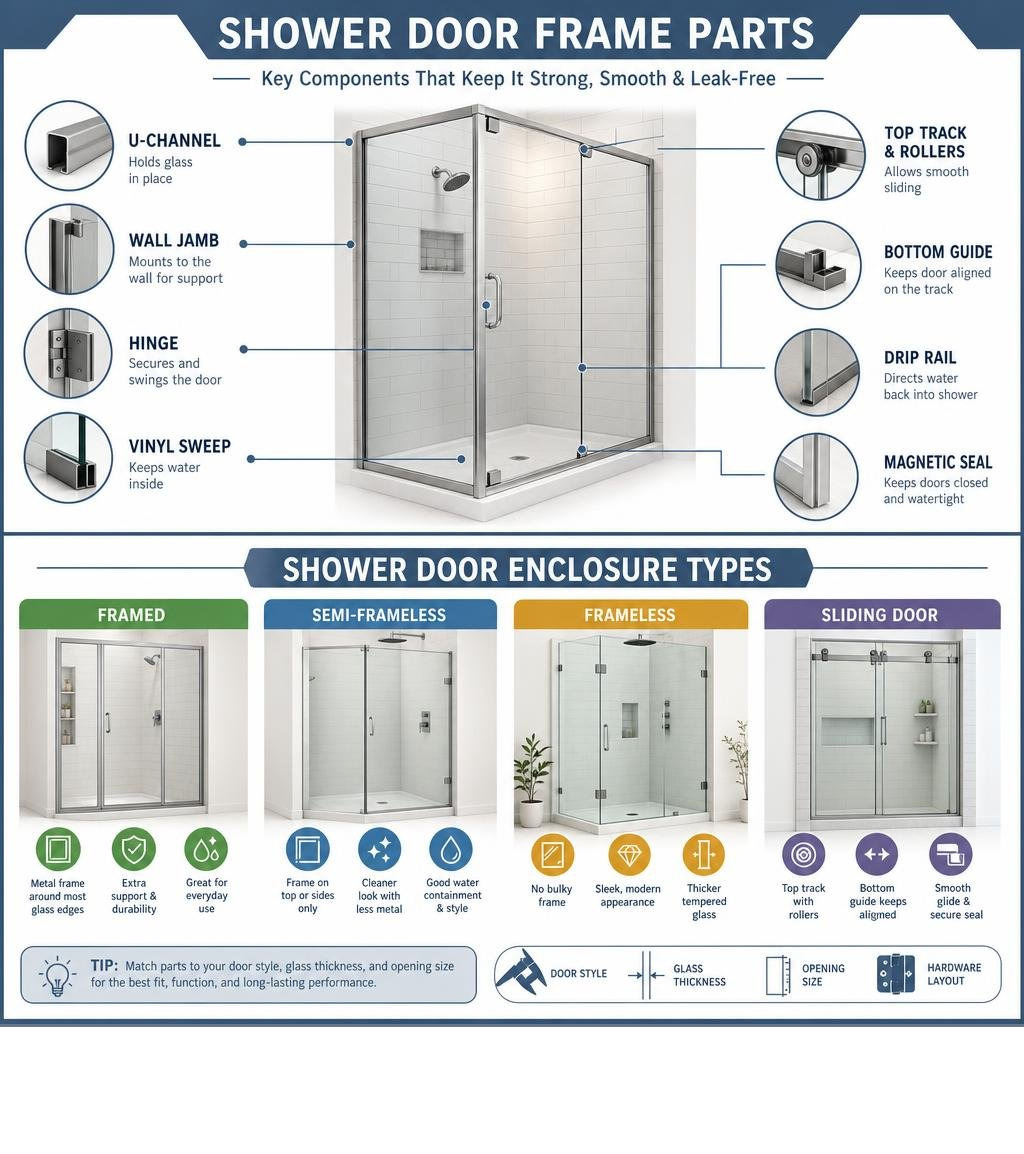
A frame for shower door can refer to the metal structure around the glass or to individual parts that keep the door supported, aligned, and sealed. Depending on the enclosure, that may include U-channels, wall jambs, hinges, rollers, tracks, bottom guides, drip rails, vinyl sweeps, magnetic seals, and bumpers.
- Framed doors: Use metal channels around most or all glass edges.
- Semi-frameless doors: Combine perimeter framing with cleaner exposed glass edges.
- Frameless doors: Use thicker tempered glass with hinges, clips, support bars, or slim U-channels.
- Sliding doors: Rely on top tracks, rollers, bottom guides, and seals.
The right part must match the door style, glass thickness, channel width, opening size, and hardware layout. A seal or roller that looks similar can still fit poorly, leak, or prevent the door from moving correctly.
I am Michael Dombek, founder of The Glass Guy of Brevard, and I have spent nearly two decades measuring, installing, and repairing custom shower glass systems throughout Brevard County. In the sections ahead, I will break down how to identify the right shower door framing and the parts that make it work.
Explore more about frame for shower door:
Key Types and Enclosure Components
When evaluating options for shower door framing, understanding how structural components interact with glass panels is essential. Shower enclosures range from fully framed models that wrap every panel in aluminum extrusions to sleek, minimalist designs that rely on heavy glass and precise anchor points. The structural framing supports the weight of the glass, defines the opening mechanism, and forms the primary barrier against water escaping onto bathroom tile.
Perimeter channels, structural headers, and wall jambs form the backbone of framed and semi-frameless systems. In sliding configurations, upper tracks house roller bearings while lower guides keep sliding panels moving along a set path. In swinging configurations, wall jambs anchor hinges or continuous pivot hardware.
Homeowners considering a bathroom upgrade or facing issues with aging hardware often benefit from learning how different designs distribute panel weight and manage water containment. Explore our guide on semi-frameless shower doors to see how perimeter support balances traditional water control with modern aesthetics.
To help evaluate structural differences, the table below highlights key attributes across primary enclosure categories:
| Enclosure Type | Framing Structure | Glass Thickness | Primary Feature |
|---|---|---|---|
| Framed | Full perimeter aluminum/metal frame | 1/4 inch | Maximum edge support and water containment |
| Semi-Frameless | Framed perimeter, frameless door edge | 1/4 inch to 3/8 inch | Sleek appearance with continuous wall support |
| Frameless | Heavy glass clips or slim U-channel | 3/8 inch to 1/2 inch | Minimalist profile and open visual space |
Framed vs. Frameless Options
The choice between framed and frameless options dictates hardware selection, structural support methods, and glass panel requirements. Fully framed enclosures enclose every glass edge in aluminum or brass channels. This design allows for lighter 1/4 inch tempered safety glass because the metal perimeter provides rigid structural integrity. Framed systems deliver excellent water retention, making them a popular choice for high-use family bathrooms in Melbourne and Palm Bay.
By contrast, frameless shower enclosures eliminate bulky metal borders to create an open visual line throughout the bathroom. Because there is no outer metal cage to hold the panels, frameless systems require heavy 3/8 inch or 1/2 inch tempered glass. The extra thickness gives the glass structural rigidity, supported by heavy-duty brass wall clamps, discrete floor clips, or slim structural U-channels along fixed panels.
Homeowners interested in learning more about open-concept designs can check out our overview of frameless shower door options for insights into layout possibilities.
Key Hardware: Channels, Rollers, Drip Rails, and Bumpers
Every functional shower door relies on dedicated hardware components to operate smoothly and prevent water from migrating into surrounding walls. Over time, friction, hard water exposure, and daily wear can degrade these parts.
Key functional components include:
- U-Channels and Wall Jambs: Metal profiles mounted directly to tiled or acrylic walls to hold fixed glass panels plumb and secure.
- Top Roller Assemblies: Ball-bearing wheel units used in bypass sliding doors that ride inside upper track channels to enable quiet movement.
- Bottom Guides: Low-profile metal or nylon brackets mounted to the curb that prevent sliding panels from swinging inward or outward.
- Drip Rails and Deflectors: Sloped extrusions attached to the bottom edge of swinging doors that direct water back toward the shower drain.
- Door Bumpers and Magnetic Jambs: Cushioned stops that absorb impact when sliding doors close, alongside magnetic door seals that hold swinging doors shut.
When hardware components misalign or wear out, doors can stick, drag, or leak. If your door exhibits binding or metal-on-metal noise, reviewing options for glass shower door repair can help determine if component replacement or alignment is required.

Comparing Materials for Shower Door Framing
Selecting the correct hardware influences how the enclosure looks, how it performs in a wet bathroom, and how well it holds up to everyday use. In coastal Florida areas such as Cocoa Beach, Satellite Beach, and Merritt Island, humidity and salt air make it especially important to choose shower framing and hardware that is appropriate for the setting.
For homeowners, the most useful way to compare framing options is to look at visible condition, finish quality, door style, and compatibility with the existing glass enclosure. A professional glass installer can confirm which hardware category fits the door design and whether worn components point to a simple service issue or a larger replacement need.
Choosing the Right Metallic Hardware Systems
Metal framing and hardware are selected based on the enclosure type, the weight of the glass, the desired appearance, and the bathroom environment. Fully framed and semi-frameless systems often use more perimeter metal, while frameless systems use smaller visible hardware points with heavier glass.
When comparing options, homeowners should pay attention to:
- Finish coordination: Chrome, brushed nickel, satin brass, and matte black are common choices that can be matched to faucets, towel bars, and other bathroom fixtures.
- Visible wear: Pitting, flaking, discoloration, or rough operation may indicate that the existing frame or hardware is reaching the end of its useful service life.
- Door style compatibility: Sliding doors, hinged doors, pivot doors, and fixed panels do not use the same framing layout, so replacement parts must be matched to the enclosure design.
- Local conditions: Bathrooms near the beach or in high-humidity areas may benefit from professional guidance on finish selection and cleaning expectations.
The Glass Guy of Brevard helps homeowners and contractors evaluate whether existing framing can be serviced or whether a new shower enclosure would provide a cleaner, more reliable result.
Synthetic Components: Vinyl Sweeps, Polycarbonate Seals, and Rubber Bumpers
Flexible and clear sealing components help control splash, cushion door movement, and close small gaps between glass, tile, and metal framing. These parts are common wear items, especially on doors that are used every day.
Homeowners may notice:
- Bottom sweeps that look warped, cracked, or cloudy: This can allow water to escape near the curb.
- Vertical seals that no longer sit tight against the glass: Gaps at the door edge can lead to dripping outside the shower.
- Bumpers that are missing or compressed: Doors may close harder against the frame or sit out of alignment.
- Discoloration that does not clean away: This may indicate aged material rather than ordinary surface buildup.
A professional assessment confirms the correct replacement profile and checks whether the seal problem is isolated or related to door alignment, worn rollers, hinge movement, or framing shift.
Professional Assessment of Shower Glass and Wall Openings

Obtaining exact measurements is essential when evaluating hardware replacement or planning a new enclosure installation. Because tempered safety glass cannot be altered after fabrication, metal framing and wall channels must be sized accurately to accommodate the specific dimensions of your shower space. For general background on certified safety glazing, the safety glazing certification council provides information for the glass industry and consumers.
When assessing shower alcoves across homes in Viera, Rockledge, and Titusville, professional glass installers evaluate overall opening width, height clearances, curb pitch, and wall plumbness. Thorough field measurements ensure that replacement components or custom glass assemblies fit correctly without binding or leaving unsightly water gaps.
Evaluating Channel Width, Glass Thickness, and Plumb Lines
When inspecting an existing enclosure, professional specialists evaluate three key structural factors:
- Glass Thickness: Determining whether the existing panel is 1/4 inch, 5/16 inch, 3/8 inch, or 1/2 inch thick. Replacement U-channels, vinyl sweeps, and roller assemblies are manufactured for specific glass gauges to ensure proper support.
- Channel Width and Track Depth: Checking the internal dimensions of wall channels and upper track extrusions to confirm that seals, rollers, or wall jambs seat securely.
- Three-Point Width Assessment: Checking the horizontal distance between finished shower walls along the threshold curb, at mid-height, and along the upper header line to detect wall runout.
If you are planning a bathroom remodel, exploring our custom options for custom shower glass doors highlights how precise professional measurements translate into clean, watertight glass enclosures.
Factoring Out-of-Plumb Walls into Hardware Selection
Bathroom walls are rarely perfectly vertical or square. Settling foundation walls, uneven tile layouts, and thick mortar beds frequently create out-of-plumb wall conditions where a wall leans slightly inward or outward.
Sliding track assemblies and heavy frameless doors require specific considerations for out-of-plumb variance:
- Standard sliding door frame systems accommodate limited out-of-plumb variance using adjustable wall jamb channels.
- Heavy frameless hinged systems require exact wall tolerances or custom-cut glass angles to maintain uniform reveal gaps.
- Continuous metal U-channels absorb minor wall runout by housing the edge of fixed panels deeper into the wall channel where needed.
Hardware Maintenance, Water Leak Prevention, and Professional Installation
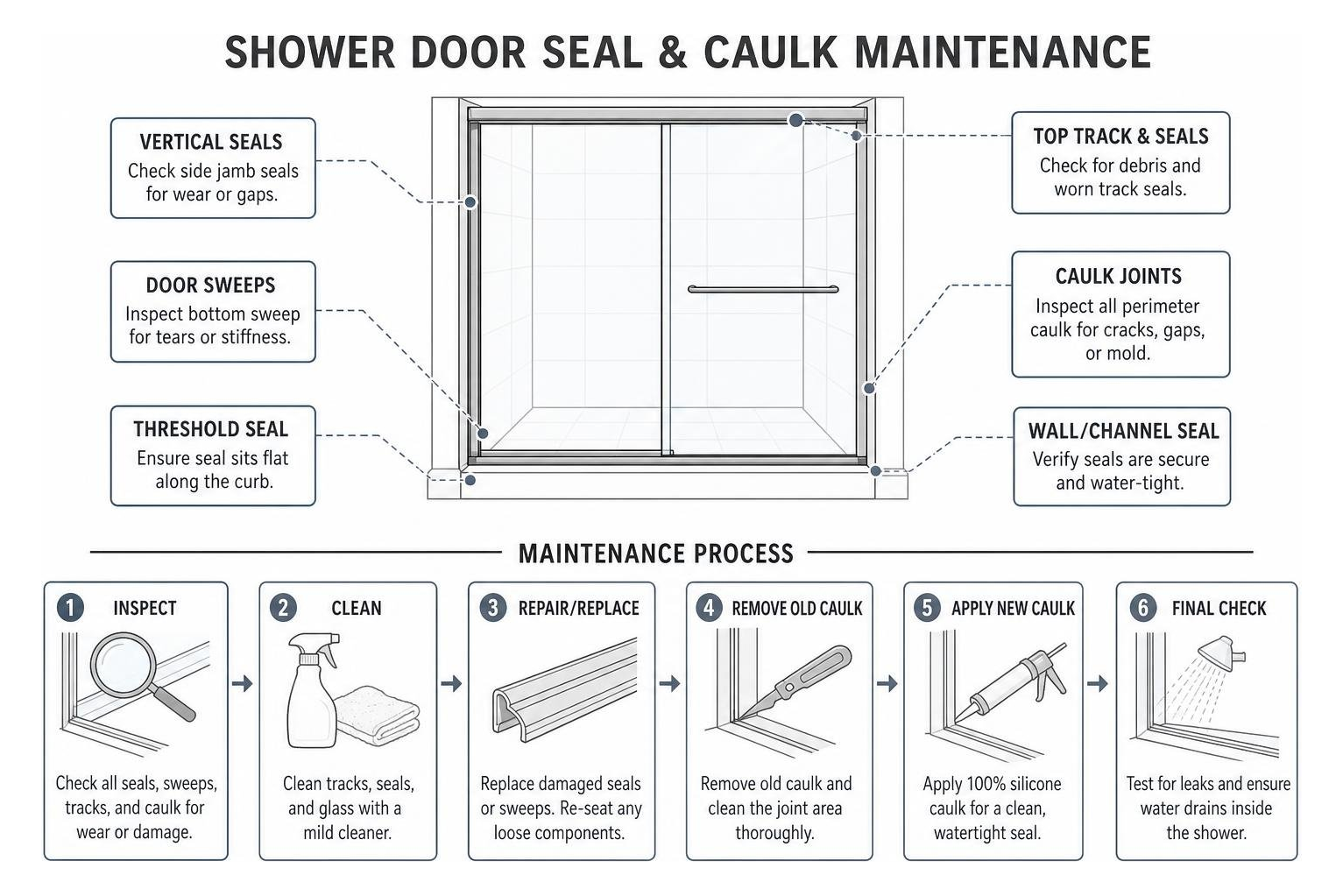
Maintaining water integrity in a shower enclosure depends heavily on the condition of perimeter framing, vinyl sweeps, and sealant joints. When water begins puddling on the bathroom floor outside the shower curb, deteriorated framing seals or misaligned track hardware are often the primary causes.
Homeowners observing moisture along baseboards or tile grout lines outside the shower should inspect perimeter hardware for visible signs of wear and then have the enclosure evaluated before water exposure spreads. For complete replacement projects or structural framing updates, reviewing professional standards for shower door installation clarifies what is involved in setting glass enclosures correctly.
Professional Evaluation and Maintenance Requirements
When our installation team at The Glass Guy of Brevard inspects an enclosure or prepares to replace worn framing hardware, we evaluate key alignment and sealing points to support long-term stability and water control.
A professional glass technician will inspect:
- Wall Jamb Alignment: Whether wall channels remain securely positioned against tile or stone surfaces.
- Perimeter Seal Condition: Whether sealant joints show gaps, separation, staining, or movement that may allow water behind the frame.
- Glass and Hardware Alignment: Whether hinges, roller bearings, and bottom guides allow the glass panels to operate smoothly without scraping or binding.
- Surface Condition Around the Frame: Whether soap residue, hard water buildup, or aged sealant is contributing to leaks or poor closure.
If you suspect worn component hardware is causing leaks, scheduling an evaluation through our shower door repair service ensures your enclosure is assessed and serviced safely.
Recognizing Common Maintenance Indicators
Over years of daily use, vinyl door sweeps can stiffen, magnetic latches can lose alignment, and perimeter caulking can degrade. Recognizing these warning signs early helps homeowners address minor issues promptly.
Key maintenance indicators include:
- Deteriorated Bottom Sweeps: Stiff, broken, or missing vinyl fins can allow water to splash under the door.
- Discolored Perimeter Silicone: Sealant that darkens, pulls away, or separates from tile joints may allow water to migrate behind wall channels.
- Recurring Water Outside the Curb: Puddles that return after normal cleaning often indicate an alignment, seal, or framing issue.
- Heavy Mineral Buildup Near Lower Channels: Buildup around the lower frame can interfere with drainage paths and make leaks harder to diagnose.
A professional visit helps determine whether the issue is limited to worn seals or whether the shower door frame, track, hinges, or glass layout should be corrected or replaced.
Frequently Asked Questions About Shower Door Framing
How do I know when my shower door frame hardware needs replacement?
Homeowners can identify hardware failure through several clear observable symptoms. Visual indicators include white corrosion or discoloration on metal channels, flaking finish plating, and dark mold growth behind clear vinyl seals that cannot be scrubbed clean. Functional warning signs include sliding doors that stick or drag, swinging doors that sag and catch on the threshold, and persistent water puddles forming on the bathroom floor after showering.
Should a bottom seal or drip rail be replaced by a professional?
A worn bottom seal or drip rail may look like a small issue, but the correct solution depends on glass thickness, door alignment, curb slope, and the way water is leaving the enclosure. Homeowners should look for visible cracking, loose fit, cloudy plastic, scraping at the threshold, or water escaping from the same area after each shower.
During a professional service visit, The Glass Guy of Brevard can confirm whether the seal itself is the problem or whether the door has shifted, the frame is out of alignment, or another component is causing the leak.
Where can replacement shower door frame parts be purchased, and what do they cost?
Replacement components such as vinyl bottom sweeps, magnetic seals, roller assemblies, and drip rails can be ordered through glass supply retailers and local specialty glass contractors. Complete replacement track systems and metal extrusions are also available through professional glass contractors. Homeowners interested in exploring scope and budgeting factors for full door upgrades can review our shower door replacement cost guide.
Conclusion
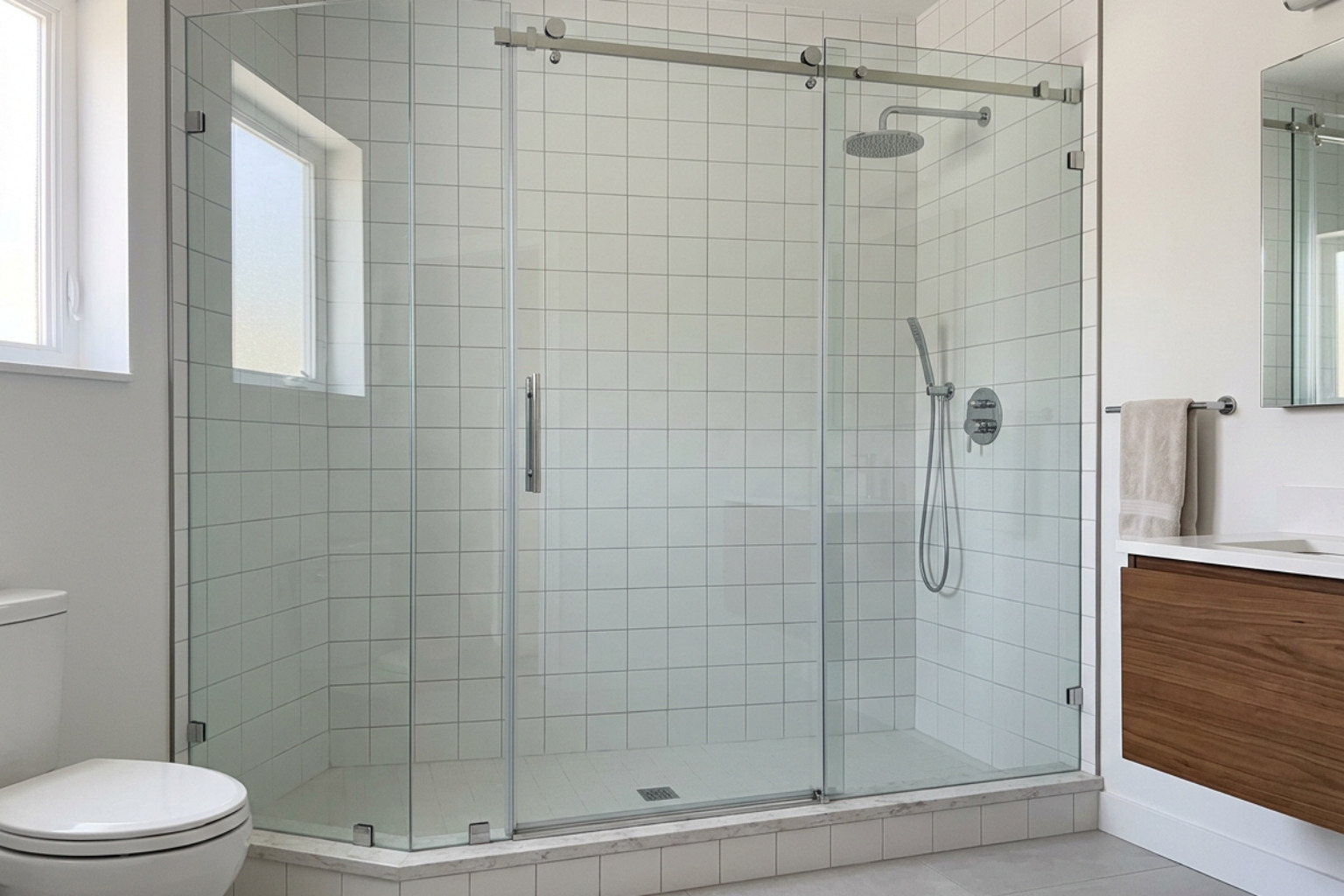
Choosing the right framing system involves balancing structural support, aesthetic preference, and water containment needs. Whether upgrading an older framed enclosure in Cape Canaveral, restoring smooth operation to a sliding door system in West Melbourne, or designing a modern heavy glass enclosure in Indialantic, selecting quality hardware matched to your specific glass thickness and wall dimensions is key to long-term success.
At The Glass Guy of Brevard, owner Michael Dombek brings nearly two decades of hands-on custom glass installation experience to every project. As a licensed glass specialist serving homeowners and contractors across Brevard County, all installations are backed by our comprehensive three-year parts and labor warranty.
If you are dealing with a leaking shower frame, worn hardware, or planning a complete bathroom transformation, contact our expert team today to request a free estimate and discover the difference professional glass craftsmanship makes for your home. Explore our work or schedule a consultation for professional shower door installation.