

When Your Shower Door Stops Working Right
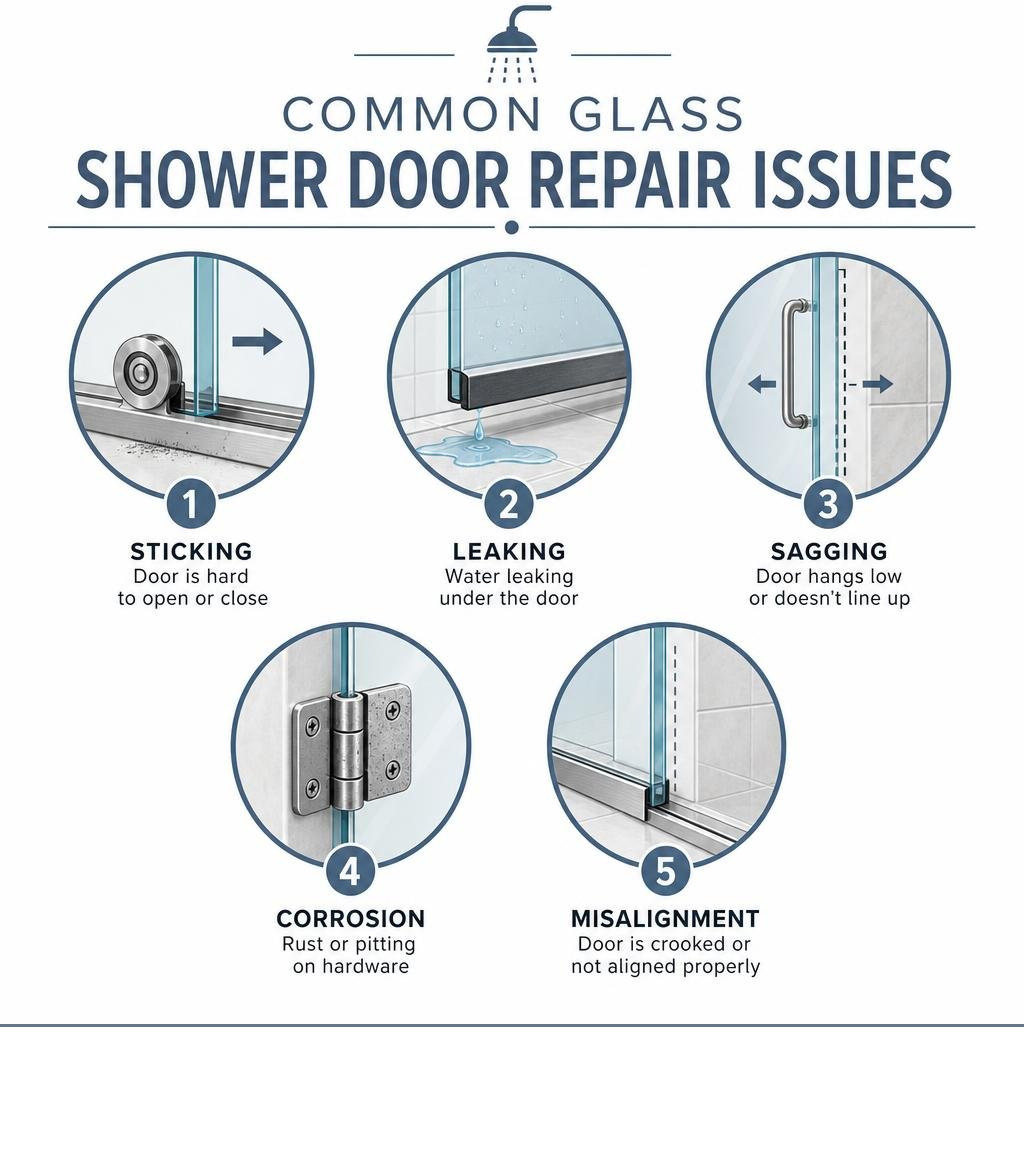
Glass shower door repair is something most homeowners will deal with at some point. Before you dig into the full guide, here is a quick overview of the most common warning signs:
- Sticking or dragging door — often caused by worn rollers or dirty tracks
- Water leaking under the door — commonly caused by worn seals or alignment issues
- Door won’t close properly — may indicate hinge or alignment problems
- Sagging door — often caused by loose hardware or heavy glass movement
- Corroded hardware — may require replacement components
Most of these issues are minor and easy to catch early. But some, like cracked tempered glass or a door that has never been installed correctly, need a professional to sort out safely.
Shower doors take a beating every single day. Steam, humidity, hard water, and constant movement all add up over time. Many of these problems become more common in Brevard County because coastal salt air can speed up hardware wear faster than most homeowners expect. A door that dragged slightly last year can be completely off track this year if the problem is ignored.
The good news is that most shower door problems follow a clear pattern. Once you know what to look for, you can figure out pretty quickly whether a simple adjustment will do the job or whether it is time to call in a professional.
I’m Michael Dombek, owner of The Glass Guy of Brevard, and I have been installing and repairing shower doors and custom glass enclosures throughout Brevard County for over fifteen years. Glass shower door repair is something I work through regularly alongside full enclosure installations, and I will walk you through exactly how to diagnose and address the most common problems step by step.
Common Issues Requiring Professional Attention
When a shower door begins to malfunction, it rarely happens overnight. Usually, small warning signs build up over weeks or months. Recognizing these symptoms early can prevent a minor alignment issue from turning into a shattered panel or contributing to water damage in the bathroom.
Sticking and Dragging Doors
A door that resists opening or makes a scraping noise along the bottom track is one of the most frequent complaints we hear. In sliding systems, this is often caused by soap scum, hair, and mineral deposits in the metal tracks, or rollers that have worn flat. For swinging doors, dragging usually indicates that the hinges have slipped or the structural wall anchoring has begun to give way under the weight of the heavy glass.
Water Leaks
If you find a puddle on your bath mat every time you run the water, your seals are failing. Over time, the clear vinyl sweeps and drip rails at the bottom of the door degrade from exposure to water and cleaning chemicals. When these seals harden, crack, or pull away from the glass, water easily escapes the enclosure. Failing silicone caulking along the stationary glass panels is another common culprit for persistent leaks.
Sagging Hinges and Misalignment
Heavy glass door panels require sturdy support. If the hinges loosen even a fraction of an inch, the door will sag. This causes the top corner of the door to pull away from the wall while the bottom corner scrapes against the threshold. Left unaddressed, a sagging door can eventually strike the metal frame or adjacent glass panel, which carries a risk of breaking the tempered glass.
Hardware Corrosion
Our coastal Florida environment, combined with high humidity inside the bathroom, creates a perfect storm for metal oxidation. We often see this throughout Brevard’s coastal communities, where salt air can speed up hardware wear on shower enclosures. While quality hardware made from durable base metals like solid brass resists rust, lower-grade metals or fixtures with damaged protective coatings will eventually pit, corrode, and lock up. This makes rollers seize and hinges stiff, putting extra stress on the glass whenever you use the door. If you notice these symptoms, scheduling a professional inspection for your shower doors is a smart way to identify the root cause before structural damage occurs.
Framed Shower Door Challenges
Framed shower doors rely on a metal perimeter to support the weight of relatively thin glass panels. While these systems are generally budget-friendly, the metal frames themselves introduce specific mechanical challenges over time.
Metal Frames and Water Traps
The aluminum or brass channels that encase framed doors are notorious for trapping moisture. Because water sits inside these tracks, mineral deposits and soap scum build up rapidly. This buildup acts like sandpaper against the moving parts of the door. Over several years, the constant moisture can also corrode the tiny steel assembly screws holding the frame corners together, causing the entire frame to warp or sag.
Track Cleaning and Maintenance
Sliding bypass doors require regular attention to function correctly. If the bottom track is filled with debris, the rollers cannot glide smoothly. We often find that homeowners try to force a stuck door, which only bends the metal track or jumps the rollers off their guide rails. Keeping tracks free of soap residue and debris helps reduce wear on rollers and allows the door to operate more smoothly.
Roller and Runner Wear
The small wheels, or rollers, at the top of sliding doors bear the entire weight of the sliding panels. These rollers are typically made of plastic or nylon spinning on a metal axis. As the plastic wears down, it develops flat spots, making the door bumpy to slide. If the internal bearings rust, the wheel will stop spinning entirely and slide flat along the upper track, eventually wearing through the roller and damaging the track itself. If your sliding system is showing severe wear, it may be time to consider a complete upgrade to new shower doors and enclosures to restore smooth, effortless operation.
Frameless Shower Door Alignment and Maintenance
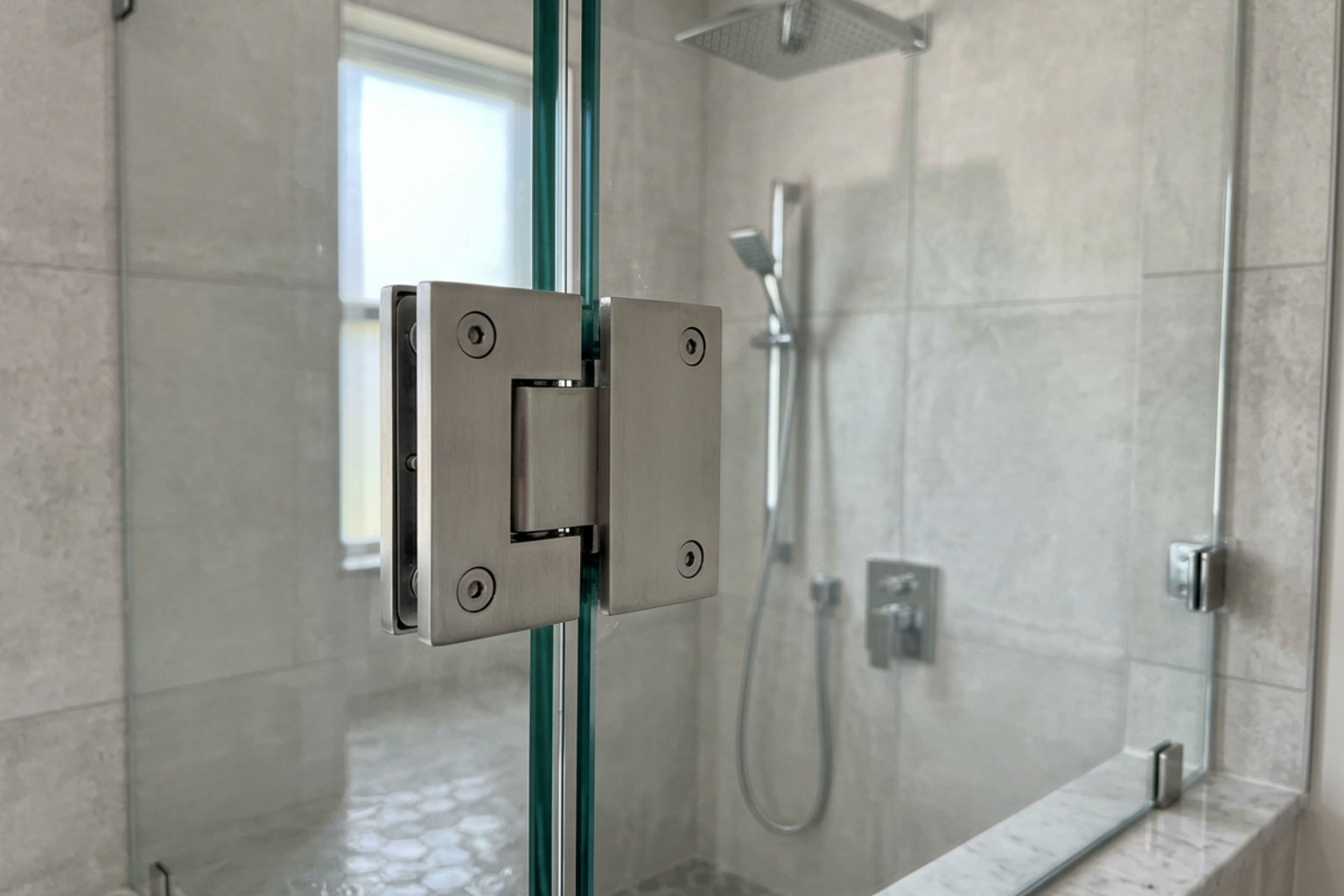
Unlike framed systems, frameless shower doors rely on heavy, thick glass panels, typically 3/8-inch or 1/2-inch thick, anchored directly to the walls or adjacent glass with heavy-duty metal hinges and clamps. Because there is no metal frame to hide imperfections, these systems demand extreme precision.
The Weight of Heavy Glass
A single frameless glass panel can easily weigh 50 to 80 pounds or more. This massive weight puts continuous, heavy structural load on the hinges and wall studs. If the original installer did not secure the hinges into solid wood blocking behind the tile, the weight of the glass can eventually pull the anchors loose from the drywall or tile, causing the door to sag dangerously. Heavy shower door glass cannot simply be “tightened” the way a light cabinet door can. The panel has to be supported, measured, and realigned carefully so the glass does not shift or bind.
Structural Hinges and Precision Adjustment
Frameless hinges use internal spring mechanisms and rubber gaskets to grip the glass securely. Over years of daily use, these gaskets can compress, allowing the glass panel to slip slightly within the hinge clamp. Because there is only a tiny clearance gap, often just 3/16 of an inch, between the door and the neighboring glass panels, even a millimeter of slippage will cause the door to bind or rub.
Alignment also affects how well the enclosure contains water. If the panel is out of square, the sweep and side seals may no longer meet the threshold or adjacent glass evenly, creating leaks that look like seal failure but actually start with alignment. A professional shower door glass repair inspection looks at the finished opening, hinge position, panel clearances, and seal contact together. Homeowners looking to upgrade or repair these high-end installations often benefit from investing in professionally built custom shower enclosures designed for long-term stability and structural integrity.
What to Check Before Scheduling a Shower Door Repair
If your shower door is acting up, a careful visual inspection can help you describe the problem clearly and decide whether professional glass shower door repair is the right next step. The goal is not to take the door apart yourself. It is to recognize warning signs early, avoid forcing the glass, and understand what a qualified technician will evaluate.
Check How the Door Moves
Open and close the door slowly and pay attention to where it catches. A sliding door that bumps, grinds, or jumps in the track may have worn rollers, debris in the track, or a track that is no longer level. A swinging door that scrapes the threshold or hits the side panel may have hinge movement, wall movement, or glass that has shifted slightly out of alignment.
If the door suddenly becomes harder to move, avoid forcing it. Extra pressure can bend hardware, damage the track, or cause the glass to strike another surface.
Look for Uneven Gaps
Stand outside the shower and look at the spacing around the door. The gap between the glass and the wall, threshold, or adjacent panel should look consistent. Wider gaps at the top or bottom often point to sagging, hinge movement, or an installation that was never properly squared.
A professional can often correct minor hinge alignment before additional damage occurs. If the glass has moved enough to rub, strike metal, or contact another panel, it should be inspected before regular use continues.
Inspect Seals, Sweeps, and Drip Rails
Water on the floor is often blamed on the bottom sweep, but the sweep is only one part of the system. Look for brittle vinyl, missing drip rail pieces, gaps near the hinge side, or seals that no longer touch the glass evenly. If a newer sweep still leaks, the door may be out of alignment or the original enclosure may not be directing water back toward the shower pan properly.
In some cases, a simple seal replacement is enough. In others, the technician may recommend adjustment, replacement shower doors, or shower door replacement glass if the panel or hardware condition makes repair unreliable.
Watch for Corrosion or Loose Hardware
Rust-colored stains, pitting, frozen rollers, loose handles, or stiff hinges are signs that the hardware is wearing down. In Brevard County homes near the coast, salt air and bathroom humidity can accelerate this process. Mild surface buildup can sometimes be cleaned with a mild non-abrasive cleaner, but pitted metal, seized screws, and corroded roller assemblies usually need professional attention.
Know When Replacement Makes More Sense
If the glass is chipped or cracked, the frame is badly corroded, or the door has recurring alignment problems, repair may only be a short-term fix. Many homeowners begin with a service call for repair and ultimately decide that a new enclosure is the better long-term solution. When that happens, professional shower doors and enclosures can restore safe operation while giving the bathroom a cleaner, more updated look.
For homes with modern, minimalist designs, professional help ensures that your seamless shower doors continue to operate with the close tolerances they require. If you live near the central coast, you can easily access professional assistance for your shower doors to resolve persistent alignment issues safely.
When to Repair vs. Replace Your Shower Door
Not every damaged shower door can or should be repaired. Deciding whether to fix your existing door or invest in a brand-new system depends on the severity of the damage, the age of the enclosure, and safety considerations.
The Danger of Cracked Tempered Glass
Tempered safety glass is designed to be incredibly strong, but it has one major vulnerability: high internal surface tension. If tempered glass receives a deep scratch, chip, or crack, the structural integrity of the entire panel is compromised. Unlike standard window glass, cracked tempered glass cannot be patched or repaired. It is manufactured to meet strict safety standards, such as those established by the Safety Glazing Certification Council (SGCC), ensuring that if the glass does fail, it shatters into thousands of small, blunt pieces to prevent severe injury. If your shower glass is chipped or cracked, the panel must be replaced immediately.
Evaluating Frame and Hardware Condition
If your framed shower door has extensive corrosion, rusty screws that are seized in place, or a warped frame that no longer sits square in the opening, repairs are usually a temporary patch. Over time, the cost of repeatedly replacing worn-out rollers, sweeps, and rusted hardware on an old system will quickly surpass the cost of installing a modern, reliable enclosure.
To help you decide on the best path forward, consider these common indicators:
| Symptom | Recommended Action | Primary Reason |
|---|---|---|
| Worn or torn vinyl bottom sweep | Simple Repair | Sweeps are inexpensive, wear items designed for easy replacement. |
| Slight door sagging or misalignment | Adjustment / Repair | Hinges can be loose; professional realignment usually solves the issue before further damage occurs. |
| Chipped, deeply scratched, or cracked glass | Immediate Replacement | Tempered safety glass is structurally unstable once chipped and may shatter. |
| Severely corroded or pitted metal frame | Full Replacement | Corrosion structural damage cannot be undone and will lead to recurring failures. |
| Stuck or flat-spotted rollers on sliding door | Repair / Part Replacement | Replacing individual rollers is straightforward if the tracks are still in good shape. |
Upgrading to a Modern Enclosure
If you are planning a broader bathroom remodel, replacing an outdated, corroded framed shower door with a modern frameless or semi-frameless enclosure is a highly effective upgrade. Upgrading to a clean, heavy glass enclosure eliminates the maintenance headaches of old framed systems and provides a clean, modern aesthetic that complements updated tile work and fixtures. For older systems with damaged panels, shower door replacement glass may solve the immediate safety issue, while full replacement can make more sense when the frame and hardware are also worn.
Frequently Asked Questions About Shower Door Maintenance
Why is my sliding shower door sticking?
A sticking sliding door is almost always caused by a dirty track or worn-out rollers. Soap scum, hair, and hard water minerals collect in the bottom track over time, creating friction that stops the door from sliding smoothly. Additionally, the small wheels at the top of the door can wear out, develop flat spots, or rust in place if water gets into their bearings. Cleaning the tracks thoroughly and replacing worn rollers will usually restore smooth operation.
Can cracked tempered glass be repaired?
No, cracked tempered glass cannot be repaired or patched. Tempered glass is manufactured under extreme heat and rapid cooling, which creates high internal stress. This process makes the glass incredibly strong, but it also means that any crack, chip, or deep scratch will eventually cause the entire panel to shatter into tiny, relatively harmless pieces. For safety reasons, a damaged tempered glass panel must be replaced completely as soon as possible.
How do I prevent water from leaking under my shower door?
To stop water from escaping under your shower door, you need to ensure your bottom sweep and drip rails are in good condition. These clear vinyl seals are designed to redirect water back into the shower pan, but they harden and crack over time. Inspect your sweep annually and replace it if it is torn or no longer makes contact with the threshold. Also, ensure the door is properly aligned; if a door hangs crookedly, it will leave gaps that seals cannot fully close.
Conclusion
Taking care of your shower door is the best way to keep your bathroom dry and safe. While routine maintenance can help extend the life of a shower door, handling heavy, thick glass panels carries real risks. A single slip can lead to shattered glass or damaged bathroom tile.
When a shower door suffers from deep structural issues, damaged glass, or alignment problems that a simple adjustment cannot fix, calling in a professional is the safest and most reliable path.
Michael Dombek and the team at The Glass Guy of Brevard bring decades of hands-on installation experience to every home in Brevard County. We specialize in custom frameless and semi-frameless shower enclosures, heavy glass systems, and vanity mirrors. We are fully licensed and insured, and we back all of our specialty glass installations with a three-year parts and labor warranty, a level of commitment to craftsmanship that is rare in our trade.
If you are dealing with a faulty shower door or planning a complete bathroom transformation, reach out to us for a free in-home estimate. We will help you find the perfect, long-lasting solution for your space with professionally installed shower doors and enclosures that stand the test of time.