

What to Know Before Choosing a Shower Door
Choosing the right shower door is one of the most important decisions in a bathroom remodel. It affects how the space looks, how easy it is to clean, and how well it holds up over time.
Here is a quick overview of the main shower door types to help you decide:
| Type | Best For | Glass Thickness | Key Advantage |
|---|---|---|---|
| Framed | Budget-conscious remodels | 1/4 in. | Lower upfront cost |
| Semi-Frameless | Mid-range upgrades | 1/4 in. – 3/8 in. | Balance of style and value |
| Frameless | Premium remodels | 3/8 in. – 1/2 in. | Clean look, easier to maintain |
| Sliding | Tight spaces | 3/8 in. | No swing clearance needed |
| Hinged / Pivot | Open layouts | 3/8 in. – 1/2 in. | Wide entry, minimal hardware |
Most homeowners planning a bathroom renovation in Brevard County are weighing a few core decisions: framed or frameless, sliding or hinged, and which glass and hardware combination fits the space. There are real differences between these options that go beyond looks, including how they perform in Florida’s humid coastal climate, how much upkeep they require, and how well they hold up after the tile contractor wraps up and the glass goes in.
This guide walks through each option clearly so you can make a well-informed choice before calling anyone out to measure.
I’m Michael Dombek, owner of The Glass Guy of Brevard, and I’ve been installing shower doors and custom glass enclosures throughout Brevard County for over fifteen years. In that time, I’ve worked on everything from basic tub-to-shower conversions to heavy glass frameless shower enclosures in high-end master baths.
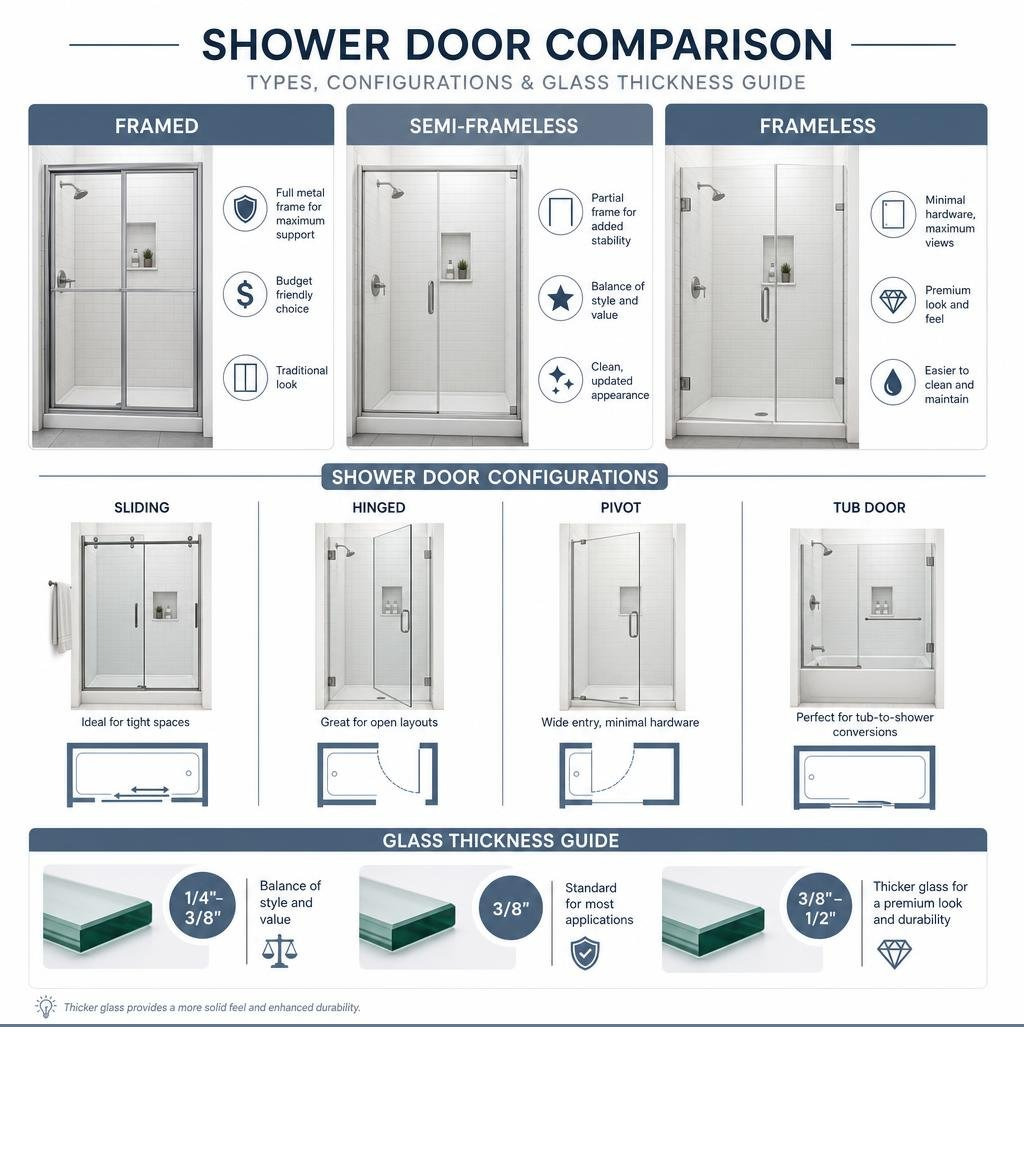
Comparing Framed vs. Frameless Shower Door Options
When planning your bathroom layout, the structural design of your glass enclosure is the first major decision. The distinction between framed and frameless options comes down to how the glass is supported and how much metal is used in the overall assembly.
A framed shower door relies on a complete aluminum frame that wraps around every edge of the glass panels. This metal skeleton provides the necessary rigidity, allowing the system to use thinner, lighter glass. The frame is secured directly to your bathroom walls and shower curb, creating a highly stable unit. However, these metal borders create distinct visual barriers in your bathroom, cutting off sightlines and making smaller spaces feel more confined.
A frameless shower door eliminates almost all of the metal framing. Instead of a perimeter track, these systems use heavy, thick glass secured with minimal, high-quality metal clips and hinges anchored directly into your wall studs or structural blocking. This lack of framing creates an open, seamless look that lets your tile work stand out and keeps the bathroom looking bright and spacious. Without metal channels resting on your tile, there are fewer places for standing water to collect, which helps prevent mold and mildew growth.
To help you visualize the differences, here is how the two styles compare across everyday performance categories:
| Feature | Framed Enclosures | Frameless Enclosures |
|---|---|---|
| Glass Thickness | Typically 1/4 inch | 3/8 inch or 1/2 inch |
| Structural Support | Aluminum framing on all sides | Heavy glass secured by wall clips and hinges |
| Visual Impact | Defines boundaries, can block light | Maximizes sightlines, open feel |
| Cleaning Effort | High; tracks and seams collect soap scum | Low; smooth glass surfaces with minimal hardware |
| Mold and Mildew Risk | Higher due to standing water in tracks | Lower; water drains directly off the glass |
Pros and Cons of Frameless Enclosures
Homeowners often choose frameless options because they want a clean, modern aesthetic. The lack of bulky metal trim gives the bathroom a streamlined, high-end appearance. Because there are no metal tracks running along the bottom curb, cleaning is much simpler. You can easily run a squeegee across the flat pane of glass without hitting metal obstacles.
Custom-engineered frameless systems require highly precise planning. Because there is no frame to hide wall imperfections, your shower walls must be plumb, and the curb must be level. These enclosures use thick, heavy glass that requires solid wood blocking behind the tile to support the weight. If your bathroom walls are out-of-plumb, the glass must be custom-cut to match the specific angles of your space. This level of customization and the weight of the premium materials make the upfront cost of frameless systems higher than framed alternatives. For homeowners seeking a clean look, investing in seamless shower doors in brevard county offers a long-term design solution that stands up to daily use.
Pros and Cons of Framed Enclosures
Framed systems are highly practical and budget-friendly. Because the aluminum frame provides structural support, the system can use thinner glass, which lowers the cost of materials. The frame also provides some adjustability, making it easier to install on walls that are not perfectly straight or plumb. The metal tracks and rubber gaskets are also highly effective at keeping water contained inside the shower stall.
The primary drawback of a framed enclosure is maintenance. Over time, the bottom metal track naturally collects water, soap scum, and hair. Because this track is difficult to dry completely, it is a common breeding ground for mold and mildew. The metal frames also wear down visually over time, especially in coastal areas like Cocoa Beach or Satellite Beach, where salt air and high humidity can cause lower-grade aluminum finishes to oxidize or discolor if they are not regularly cleaned.
Glass Thickness and Hardware Finish Selection
The glass thickness and the hardware finish you select will dictate both the structural integrity of your shower door and how well it coordinates with the rest of your bathroom fixtures. When designing custom shower enclosures in brevard county, matching the glass weight to the correct hardware ensures the door operates smoothly for years.
How Glass Thickness Affects Your Shower Door Performance
Glass thickness is directly tied to the structural design of your enclosure. Standard options include:
- 1/4 Inch Glass: This is the standard thickness for fully framed shower doors. It is lightweight and easy to operate, but it requires the metal frame to prevent the glass from flexing or rattling when you open and close the door.
- 5/16 Inch Glass: Often used in semi-frameless sliding systems or mid-range doors, this thickness offers a slightly more solid feel than 1/4 inch glass while keeping the overall weight manageable for standard roller tracks.
- 3/8 Inch Glass: This is the industry standard for high-quality frameless installations. It provides excellent structural stability, feels incredibly sturdy to the touch, and does not flex. High-quality sliding systems combine this heavy glass with a smooth roller mechanism for a premium feel.
- 1/2 Inch Glass: This is the heaviest glass available for residential installations. It is typically reserved for large, stationary glass panels or premium custom enclosures where maximum stability and a substantial, solid feel are desired.
Thicker glass panels are heavier, requiring heavy-duty brass or stainless steel anchors to keep them securely in place.
Hardware Finishes and Maintenance Considerations
Choosing a hardware finish is about balancing your design preferences with the amount of cleaning you are willing to do. In our coastal Florida environment, selecting high-quality finishes applied over durable base metals like solid brass or stainless steel is key to long-term durability, as the base metal provides the actual resistance to structural corrosion.
- Matte Black: This finish offers a bold, contemporary look that contrasts beautifully with light-colored tile. It is highly popular for modern and industrial designs. Matte black is excellent at hiding fingerprints, though hard water spots can show up more clearly if the hardware is not wiped down occasionally.
- Brushed Nickel: A highly versatile finish that coordinates easily with traditional and modern bathroom plumbing fixtures. Its brushed texture is incredibly forgiving, hiding water spots, soap residue, and fingerprints better than almost any other option.
- Polished Chrome: This classic, highly reflective finish brightens up any bathroom. It is durable and easy to clean, but because of its mirror-like surface, water spots and fingerprints will show up quickly.
- Brushed Gold: Adding a warm, upscale feel to the bathroom, brushed gold works well with neutral color palettes. Modern gold finishes applied over solid brass are highly resistant to tarnishing, but they do require regular wiping to keep soap film from dulling their luster.
Sizing, Configurations, and Layout Planning
Before selecting a shower door style, you must analyze your physical bathroom layout. The amount of clearance space you have, the placement of your vanity, and the straightness of your walls will narrow down your choices.
Selecting the Right Sliding Shower Door Mechanism
The mechanism that opens your door should match the layout of your bathroom:
- Sliding (Bypass) Doors: These doors consist of two panels that slide past one another on a track. They are highly space-efficient because they do not require any clearance space outside the shower. This makes them ideal for narrow bathrooms or layouts where the toilet or vanity sits close to the shower entry. Modern sliding doors often feature exposed rollers at the top, giving them an industrial, barn-door look, and some include soft-close systems to prevent the glass from slamming.
- Hinged and Pivot Doors: These doors swing open like a standard interior door. A hinged door is attached directly to a wall or a stationary glass panel, while a pivot door rotates on top-and-bottom pivots. These systems provide a wide, welcoming opening but require plenty of clearance space in front of the shower so the door does not strike your vanity, toilet, or bathroom door.
Measuring and Configuring Your Space
Taking accurate measurements is the most critical step in planning your shower door installation. You must measure the finished opening width at three separate points: the bottom curb, the middle, and the top. Walls in older homes in areas like Melbourne or Rockledge often settle over time, meaning the distance between your walls at the top might be different than the distance at the bottom.
If your walls are out-of-plumb by more than a fraction of an inch, a standard off-the-shelf door kit will not fit correctly, leading to gaps and water leaks. In these cases, custom-cut glass panels are required to match the exact slope of your walls.
You also need to plan for your specific enclosure configuration. A standard alcove shower only requires a single door or a door-and-panel combination. Corner showers or neo-angle configurations require multiple glass panels joined at precise angles (usually 90 or 135 degrees) to form a watertight seal. If you are converting an old bathtub into a walk-in shower, you will also need to decide whether to install a full-height door or a shorter tub-height door.
Cost Factors and Price Ranges for Enclosures
The overall cost of your shower door project is influenced by several factors beyond the size of the opening. Understanding these variables helps you prioritize where to spend your budget:
- Glass Type and Thickness: Standard clear glass is the most economical option. Specialty glass, such as frosted, rain, or low-iron glass (which removes the natural greenish tint of standard glass), will increase the material cost. Choosing 1/2 inch glass over 3/8 inch glass also increases the price due to the weight and manufacturing requirements.
- Hardware Materials and Finishes: Basic finishes like polished chrome or brushed nickel are typically standard. Premium finishes like matte black or brushed gold often carry a slight price premium. Additionally, heavy-duty solid brass hardware costs more than aluminum components but offers superior longevity.
- Custom Fabrication: If your shower walls are out-of-plumb, or if you want a custom height or a unique notch cut into the glass to fit around a built-in shower bench, the glass must be custom-cut and tempered specifically for your space. This custom fabrication adds to the overall cost compared to standard, factory-sized glass panels.
- Professional Installation: Hiring a specialist ensures the heavy glass is handled safely, anchored securely to structural framing, and sealed correctly to prevent leaks. This is especially important for frameless systems where there is zero margin for error. If you are looking for a reliable professional to handle the job, finding expert local shower glass installation ensures your enclosure is built to last.
Frequently Asked Questions About Shower Glass
How do I choose between a frameless and a framed glass shower door?
Your choice should be guided by your design preferences, maintenance goals, and budget. If you prefer a clean, open look that showcases your tile work and is easy to squeegee clean, a frameless door is the ideal choice. If you are working within a tighter budget or have walls that are significantly out-of-plumb, a framed or semi-frameless door provides a highly practical, water-tight solution.
What is the best glass thickness for a frameless shower door?
For most residential frameless installations, 3/8 inch tempered glass is the industry standard. It provides the perfect balance of structural strength, safety, and weight, ensuring the door feels solid and swings smoothly without putting excessive strain on your wall hinges. For exceptionally tall panels or high-end custom designs, 1/2 inch glass may be recommended for added stability.
How do coastal climate conditions affect shower door hardware?
Brevard County’s coastal climate brings high humidity and salt air, which can accelerate the wear on low-grade metals. To prevent corrosion and pitting, it is important to choose high-quality solid brass or stainless steel hardware with plated finishes. Keeping your bathroom well-ventilated by running an exhaust fan during and after your shower also helps manage moisture levels and protects your hardware over time.
Conclusion
Selecting the right shower door requires balancing style, space constraints, and long-term maintenance. Whether you choose a sleek, heavy glass frameless enclosure to open up your master bath or a highly functional semi-frameless sliding door for a compact guest bathroom, getting the measurements and installation right is what ensures your investment lasts.
At The Glass Guy of Brevard, we specialize in helping homeowners throughout Brevard County find the perfect glass solutions for their homes. Owner Michael Dombek brings decades of hands-on installation experience to every project, personally measuring and fitting heavy glass frameless shower enclosures, semi-frameless doors, custom vanity mirrors, and mirrored walls.
We are fully licensed and insured, and we back all of our work with a three-year parts and labor warranty, a level of commitment to quality that is hard to find in the specialty glass trade. We serve residential homeowners and trade contractors across West Melbourne, Viera, Palm Bay, Satellite Beach, Rockledge, Indialantic, Cocoa Beach, Cocoa, Melbourne, Titusville, Cape Canaveral, and Merritt Island.
If you are planning a bathroom remodel and want to make sure your glass is installed with precision, contact us today to schedule a free in-home estimate. We will take precise measurements, discuss your design options, and provide a clear quote to help you complete your project.
