
What to Know Before Buying Shower Doors

Shower doors are one of the most visible upgrades in any bathroom, and today’s homeowners have more choices than ever. Whether you’re replacing an outdated shower door or remodeling your entire bathroom, understanding the differences between framed, frameless, sliding, hinged, and custom glass shower doors makes it much easier to choose a door that fits your space, your style, and your budget.
Here is a quick overview of the main options to help you compare at a glance:
| Type | Frame Style | Glass Thickness | Best For |
|---|---|---|---|
| Framed | Full metal frame | 3/16″ to 1/4″ | Budget-friendly, standard alcove showers or tub-shower combinations |
| Semi-Frameless | Partial frame | 1/4″ to 3/8″ | Homeowners who want a cleaner look without going fully frameless |
| Frameless | No frame | 3/8″ to 1/2″ | Modern bathrooms, custom layouts, and easier day-to-day cleaning |
| Sliding | Any | Varies | Small bathrooms, bathtub openings, and spaces without door-swing clearance |
| Hinged / Pivot | Frameless or semi | 3/8″ to 1/2″ | Walk-in showers, wider entries, and a more open custom-glass look |
The best choice depends on practical questions: How large is the bathroom? Is the shower a walk-in or a tub-shower combination? Do you want the most open modern appearance, the easiest cleaning routine, or the most budget-conscious solution? Those buying decisions matter more to most homeowners than the behind-the-wall details.
This guide walks you through the options that affect your decision most: frame style, layout, glass style, cleaning preferences, pricing factors, and what to expect from a professional installation here in Brevard County.
I’m Michael Dombek, owner of The Glass Guy of Brevard, and I’ve been designing and installing custom shower doors and glass enclosures for homeowners and contractors throughout Brevard County for nearly two decades. My goal is to help you compare your options clearly so you can choose the right shower door for your bathroom.
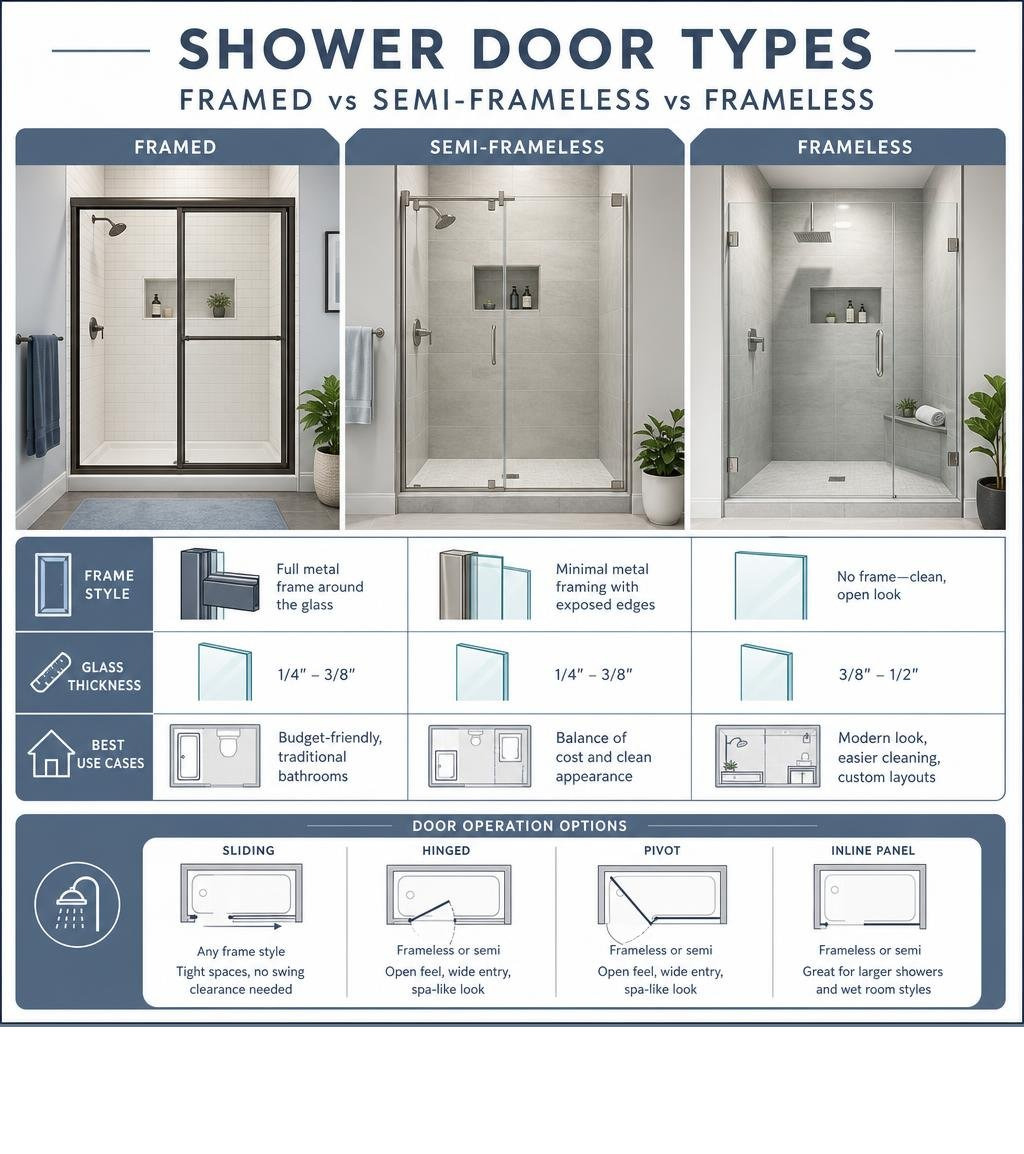
Understanding Shower Door and Frame Options
Selecting the right shower door and frame style is usually the first major decision. The frame style affects appearance, cleaning, customization, and overall cost. For most homeowners, the choice comes down to how modern you want the bathroom to look, how much maintenance you want to do, and how much flexibility your layout requires.
Framed shower doors have metal around the perimeter of the glass and are often the most budget-friendly option. They remain a practical choice for many Brevard County bathrooms, especially standard alcove showers and tub-shower combinations where the goal is a clean replacement without changing the entire layout. The frame can also help support thinner glass, which is one reason framed systems are often more economical than heavy-glass frameless enclosures.
The main tradeoff with a framed shower door is visual weight and maintenance. More metal means a more traditional look, and tracks or frame edges can collect soap residue and hard water buildup over time. Still, framed doors can be a smart choice when the homeowner wants dependable water control, a familiar style, and a more budget-conscious solution.
Semi-frameless shower doors offer a cleaner appearance while still using some metal support around the opening. They are a good middle ground for homeowners who want a more updated look but do not necessarily need a fully custom frameless enclosure. Semi-frameless options can work well in guest bathrooms, secondary bathrooms, and straightforward remodels.
Frameless shower doors create the most open, modern look. They show off tile work, make the bathroom feel larger, and are generally easier to wipe down because there are fewer metal channels. They are often the best choice for custom walk-in showers, larger primary bathrooms, and homeowners who want the cleanest glass-focused design.
When planning a bathroom upgrade, it helps to think about the shower door alongside the rest of the room. Glass choices, tile layout, mirrors, and lighting all affect the finished look. For related design ideas, see our guide to bathroom remodeling and our work with custom mirrors.
Below is a homeowner-focused comparison of how these three primary styles differ:
| Feature | Fully Framed | Semi-Frameless | Fully Frameless |
|---|---|---|---|
| Typical Budget | Lowest | Middle | Highest |
| Best Fit | Standard showers and tub openings | Updated bathrooms with simple layouts | Custom walk-in showers and modern remodels |
| Appearance | More visible metal | Cleaner than framed | Most open and modern |
| Cleaning | More tracks and edges to maintain | Moderate maintenance | Fewer channels and easier glass access |
| Customization | Often standard sizes | Some custom options | Best for custom measurements and unique layouts |
Why Choose Custom Shower Doors?
Custom shower doors are often the best choice when a standard door will not fit the space, the bathroom has been remodeled, or the homeowner wants a cleaner finished look. Instead of forcing a stock-size door into an opening, custom shower glass is measured around the finished tile, curb, walls, and layout.
This matters most in non-standard openings, older Brevard County homes, and bathrooms with unique features such as knee walls, angled walls, wider entries, or partial glass panels. A custom layout can help the door fit better, operate more smoothly, and look like it belongs with the rest of the bathroom design.
Custom shower doors also give homeowners more flexibility with heavy glass, hardware finishes, fixed panels, return panels, and glass styles. For unique bathrooms, that flexibility can be the difference between a door that simply covers the opening and a glass enclosure that feels intentionally designed for the room.
Professional measurements also allow homeowners to choose wider openings, fixed panels, return panels, and other custom configurations that are difficult to achieve with stock shower doors.
How to Choose the Right Shower Door
The right shower door should fit the way you actually use the bathroom. Before choosing a style, consider these practical buying factors:
- Bathroom size: Sliding shower doors are often better for smaller bathrooms because they do not need room to swing open. Hinged and pivot doors work best when there is clear space in front of the shower.
- Door swing clearance: A swinging door should not interfere with the toilet, vanity, towel bars, or bathroom entry door. If space is tight, a bypass or sliding configuration may be more practical.
- Budget: Framed systems are usually more budget-conscious, semi-frameless doors offer a balanced upgrade, and frameless shower doors are typically the premium option.
- Desired appearance: Clear frameless glass creates the most open look, while framed and textured options can provide more privacy or a more traditional style.
- Cleaning preferences: Homeowners who want easier routine cleaning often prefer frameless or minimal-track systems because there are fewer edges where residue can collect.
- Existing bathtub vs. walk-in shower: Tub-shower combinations often work well with sliding or framed options, while walk-in showers are ideal for frameless, hinged, pivot, or custom shower glass designs.
Layouts, Configurations, and Glass Customization
The layout of your bathroom determines which shower door configurations will feel comfortable and practical. Standard layouts include alcove installations, corner showers, neo-angle enclosures, tub-shower combinations, and walk-in showers with one or more fixed glass panels.
Proper space planning helps prevent everyday annoyances, such as a door bumping into a vanity or a layout that makes the shower feel cramped. If your bathroom has unique angles, knee walls, or a non-standard opening, standard off-the-shelf doors may not fit the way they should. Specialty shower doors—including corner layouts, half-glass designs, and custom configurations—are often the best solution for unique bathroom layouts. Homeowners who want a cleaner, more open look often choose seamless shower doors or invest in custom shower enclosures that are designed around the finished space.
Fixed glass shower panels and glass shower walls have become increasingly popular in modern bathrooms because they create an open walk-in design while reducing the amount of moving hardware. A fixed shower glass wall can also help define the shower area without making the bathroom feel closed off.
Selecting the Right Layout for Sliding Shower Doors
Sliding shower doors are a practical, space-saving choice for bathrooms where a swinging door would be inconvenient. They are especially common for tub-shower combinations, guest bathrooms, and narrow layouts where every inch of floor space matters.
Traditional bypass systems have two panels that slide past one another. Newer sliding designs may use cleaner-looking rollers and a fixed glass panel to create a more open appearance. For homeowners, the most important question is whether you need access from both sides or simply want a smooth, modern sliding entry.
Depending on your space and budget, sliding configurations can vary widely:
- Standard sliding shower doors: A practical choice for tub-shower openings and smaller bathrooms.
- Double sliding systems: Useful when you want to enter from either side of the shower or bathtub.
- Semi-frameless sliders: A good balance of cleaner design and moderate cost.
- Frameless sliding shower doors: A more modern option for homeowners who want less visible metal and a higher-end appearance.
Hinged and Pivot Door Configurations
Hinged and pivot doors offer a traditional swinging operation and a more open entry. They are popular for walk-in showers, primary bathrooms, and remodels where the homeowner wants the shower glass to feel like part of the room design rather than a separate enclosure.

The main consideration is clearance. A swinging shower door needs enough room to open without hitting the toilet, vanity, towel bars, or bathroom door. In a compact bathroom, a sliding design may be easier to live with. In a larger bathroom, a hinged or pivot door can create a wider entry and a more custom feel.
For large openings, homeowners often choose a swinging door with a fixed glass return panel. This combination keeps the bathroom feeling open while helping contain water inside the shower.
Choosing Glass Styles and Hardware Finishes
The combination of shower door glass and hardware finish defines the final look of your bathroom. The most popular glass styles include:
- Clear Glass: Maximizes light and makes small bathrooms feel larger, though it shows water spots more easily.
- Frosted Glass: Provides more privacy while still allowing light to pass through.
- Rain Glass: Uses a textured pattern that helps obscure water spots and fingerprints.
- Textured Glass: Includes ribbed, fluted, or patterned designs that add visual interest and privacy.
Your hardware finish should coordinate with your vanity faucets, mirrors, and light fixtures. Polished chrome and brushed nickel remain classic options, while matte black, brushed gold, and oil-rubbed bronze are commonly requested choices for homeowners who want a more distinctive finish. In Brevard County’s coastal climate, humidity and salt air make quality hardware especially important for long-term appearance.
Glass Thickness, Safety, and Professional Installation
When comparing shower glass doors, thickness and safety still matter, but most homeowners do not need a technical explanation to make a good buying decision. Framed doors typically use thinner glass because the frame provides much of the structural support. Frameless shower doors usually use thicker glass because the glass itself creates more of the finished look and feel.
For safety, shower door glass should be tempered safety glass and certified through the Safety Glazing Certification Council. That gives homeowners confidence that the glass is made for this type of application without needing to study technical standards.
Professional measurement is one of the most important parts of ordering custom shower doors. Bathrooms are rarely perfectly square, which is why accurate measurements are important before the glass is ordered. This helps the finished door fit the actual opening, close properly, and look intentional.
Professional installation also helps protect your investment. The installer considers the finished tile, curb, wall conditions, door swing, hardware placement, and water-control needs before recommending a configuration. If you are looking for a reliable local specialist, you can explore our page on shower doors and enclosures installed professionally or search for shower glass near me to learn more about local options.
What Affects the Price of Shower Doors?
Shower door pricing can vary because every bathroom is a little different. Exact pricing depends on the finished opening, selected materials, and installation requirements, but these are the most common factors:
- Size of the opening: Larger openings require more glass and may need additional panels.
- Framed vs. frameless design: Framed options are often more budget-friendly, while frameless systems typically cost more because they use heavier glass and more specialized hardware.
- Glass thickness and style: Thicker glass, textured glass, frosted glass, and specialty patterns can affect the final cost.
- Custom measurements: Non-standard openings, angled walls, knee walls, and custom shower glass designs require more planning than basic standard-size doors.
- Hardware finish: Premium finishes or upgraded handles, hinges, and rollers can change the price.
- Installation complexity: Layouts with returns, multiple panels, unusual angles, or tight access may require more installation time.
A professional estimate is the best way to compare options because it lets you see how different choices affect the final investment. Michael Dombek and The Glass Guy of Brevard can walk you through practical choices that fit your bathroom rather than pushing a one-size-fits-all product.
How to Maintain and Clean Your Glass Shower Doors
Routine maintenance helps keep shower glass clear and reduces hard water buildup. A simple squeegee habit after showering can make a noticeable difference, especially in homes with mineral-heavy water.
Use mild, non-abrasive cleaners and soft cloths when cleaning the glass and hardware. Avoid harsh chemicals, abrasive pads, and anything that can scratch the glass or damage the finish. Keeping tracks, rollers, hinges, and seals free of soap residue and debris can also help the door operate more smoothly over time.
Frequently Asked Questions About Shower Glass
What is the difference between 3/8-inch and 1/2-inch glass?
Both are common options for high-quality frameless shower doors. For many homeowners, 3/8-inch glass provides the right balance of strength, appearance, and cost. Half-inch glass has a heavier, more substantial feel and is often selected for premium custom enclosures. The best choice depends on your layout, door size, hardware selection, and budget.
Which shower door works best in a small bathroom?
Sliding shower doors are often the most practical choice in small bathrooms because they do not need floor space to swing open. A frameless fixed panel with a sliding door can also help the room feel more open. If the bathroom has enough clearance, a hinged door may still work, but it should be planned carefully around the vanity, toilet, and entry door.
Are sliding or hinged shower doors better?
Sliding and hinged shower doors are better for different situations. Sliding doors are usually the better choice when floor space is limited or when the opening is over a bathtub. Hinged doors are often preferred for walk-in showers, wider entries, and bathrooms where there is enough clearance for the door to swing comfortably. The right choice depends on your bathroom layout, access needs, cleaning preferences, and the overall look you want.
Which shower door is easiest to clean?
Frameless and minimal-track shower doors are usually easier to clean because there are fewer metal channels and edges where soap residue can collect. Clear glass still needs regular wiping to prevent hard water buildup, but fewer tracks generally means less detailed cleaning.
Can shower doors be installed over a bathtub?
Yes. Many homeowners choose sliding or framed shower doors for bathtub openings because they save space and provide better water control than a shower curtain. Semi-frameless and frameless tub doors may also be available depending on the opening, tile condition, and desired appearance.
How do out-of-square bathroom walls affect installation?
Bathrooms are rarely perfectly square, especially after tile work or remodeling. Professional measurements are important before ordering custom shower doors because the glass needs to fit the finished opening, not just the original plan.
Why is professional measurement critical before ordering?
Once tempered safety glass is made, it cannot be adjusted the same way wood or metal can. A professional measure-and-quote visit helps account for the finished opening, wall angles, curb slope, door clearance, and hardware placement before the glass is ordered.
Conclusion
Choosing the right shower doors means balancing appearance, functionality, maintenance, and budget. With the right design and professional installation, a custom shower door can complement your bathroom for years to come.
When you work with Michael Dombek and the team at The Glass Guy of Brevard, you are partnering with a fully licensed and insured local specialist with nearly two decades of specialty glass installation experience. We take pride in delivering precise, custom-tailored installations for homeowners and contractors throughout Brevard County, including Melbourne, Palm Bay, Viera, Rockledge, Cocoa Beach, Satellite Beach, Merritt Island, Titusville, and Cape Canaveral.
To ensure complete peace of mind, we back all of our custom work with a comprehensive three-year parts and labor warranty, a level of commitment that is rare in the specialty glass trade.
Ready to transform your bathroom with a custom glass enclosure? Contact us today to request a free estimate and experience the difference of working with The Glass Guy of Brevard.