

When Upgrading Your Bathroom Glass Is the Right Move
Shower glass replacement is one of the most impactful upgrades you can make to a bathroom, and knowing when and how to approach it can save you real time and money.
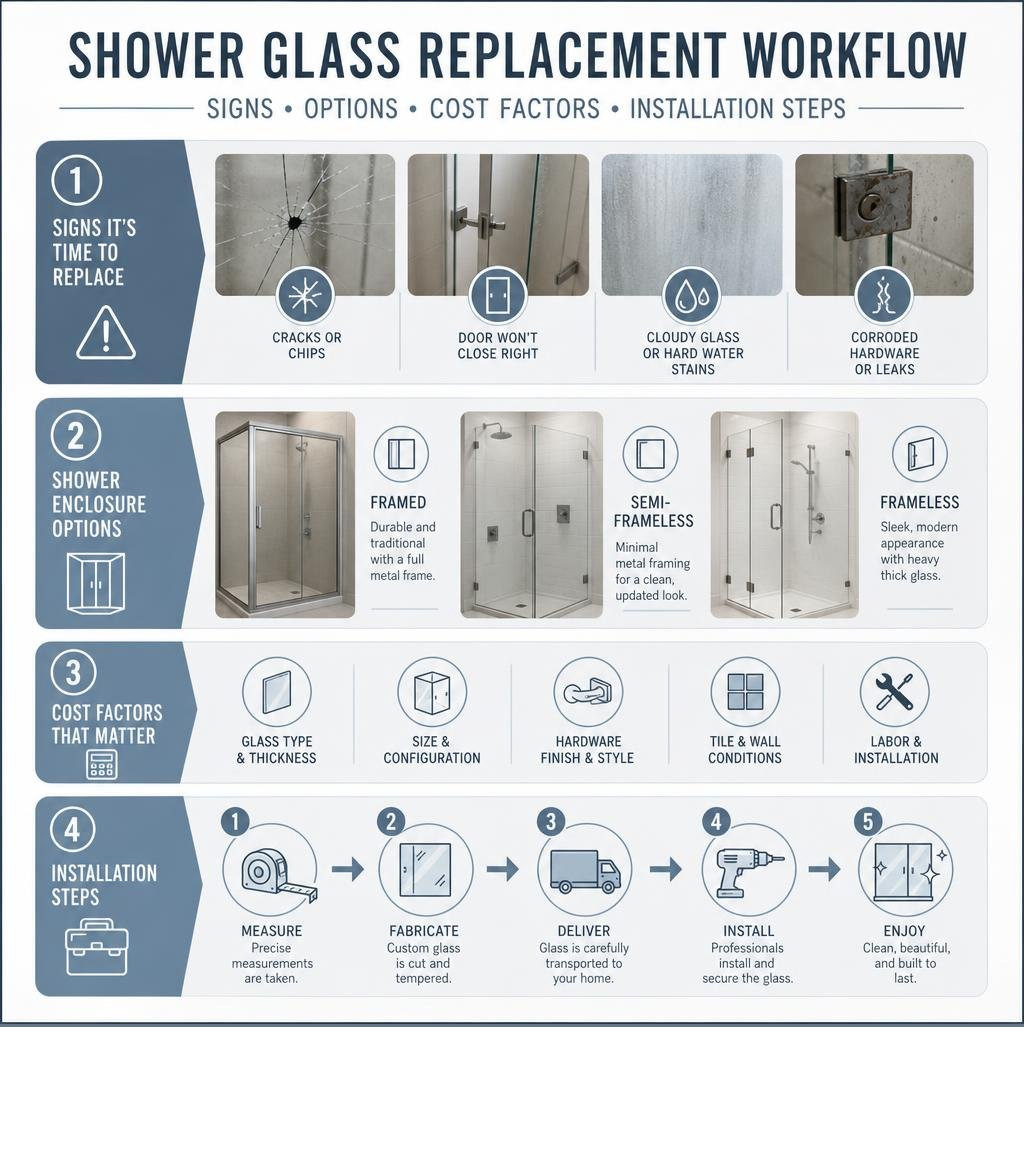
Here is a quick overview of what most homeowners need to know:
- Can you replace just the glass? Yes, in most cases. If your existing hardware is in good shape, new glass can be custom fabricated to fit without touching the frame or tile.
- What types of enclosures exist? Framed, semi-frameless, and frameless are the three main options, each with different glass thickness requirements and price points.
- What glass options are available? Clear float glass, low-iron ultra-clear glass, and frosted privacy glass are the most common choices.
- Should you hire a professional? For frameless systems and anything with heavy glass, yes. Precise measurements and proper sealing matter a lot.
- How long does it take? Most installations are completed in a single visit once the glass has been fabricated.
A cracked panel, a door that no longer closes right, or glass that looks permanently cloudy can make an otherwise nice bathroom feel tired and worn. Those are not just cosmetic issues either. Damaged tempered glass loses structural integrity over time, and leaking enclosures can hide water damage behind walls and under tile.
Florida’s humidity and salt air add another layer of urgency for homeowners here on the Space Coast. Hardware corrodes faster, seals break down sooner, and what starts as a minor issue can turn into a bigger problem if left alone.
I’m Michael Dombek, owner of The Glass Guy of Brevard, and I’ve spent nearly two decades specializing in custom shower glass replacement and enclosure installations throughout Brevard County. In this guide, I’ll walk you through everything you need to make a confident, well-informed decision about your shower glass project.
Relevant articles related to shower glass replacement:
Critical Signs Your Shower Glass Needs Attention
Knowing when your enclosure requires professional attention can prevent minor annoyances from escalating into costly water damage. Over time, daily exposure to moisture, mineral-heavy water, and movement takes a toll on bathroom fixtures. Here are the clear indicators that it is time to evaluate your glass panels.
Small Chips or Cracks in Tempered Glass
Tempered safety glass is designed to withstand everyday impact, but any visible chip or edge crack severely compromises its structural integrity. Unlike ordinary annealed glass, tempered glass is under intense surface compression. A single chip creates a localized point of high stress. Over time, heat expansion from hot showers and mild vibrations from opening and closing the door can cause a chipped panel to shatter unexpectedly. If you spot even a minor flaw along the edge of your glass, a prompt evaluation is necessary.
Permanent Hard Water Etching and Staining
Mineral deposits from tap water build up on untreated shower panels over months and years. While surface soap scum washes away with routine cleaning, hard minerals eventually etch into the microscopic pores of the glass itself. Once chemical etching occurs, no amount of scrubbing or commercial cleaner will restore transparency. The glass takes on a permanently hazy, white film that makes the entire bathroom appear aged. In these situations, replacing the affected panel is the only way to restore a pristine finish.
Discolored, Hardened, or Moldy Seals
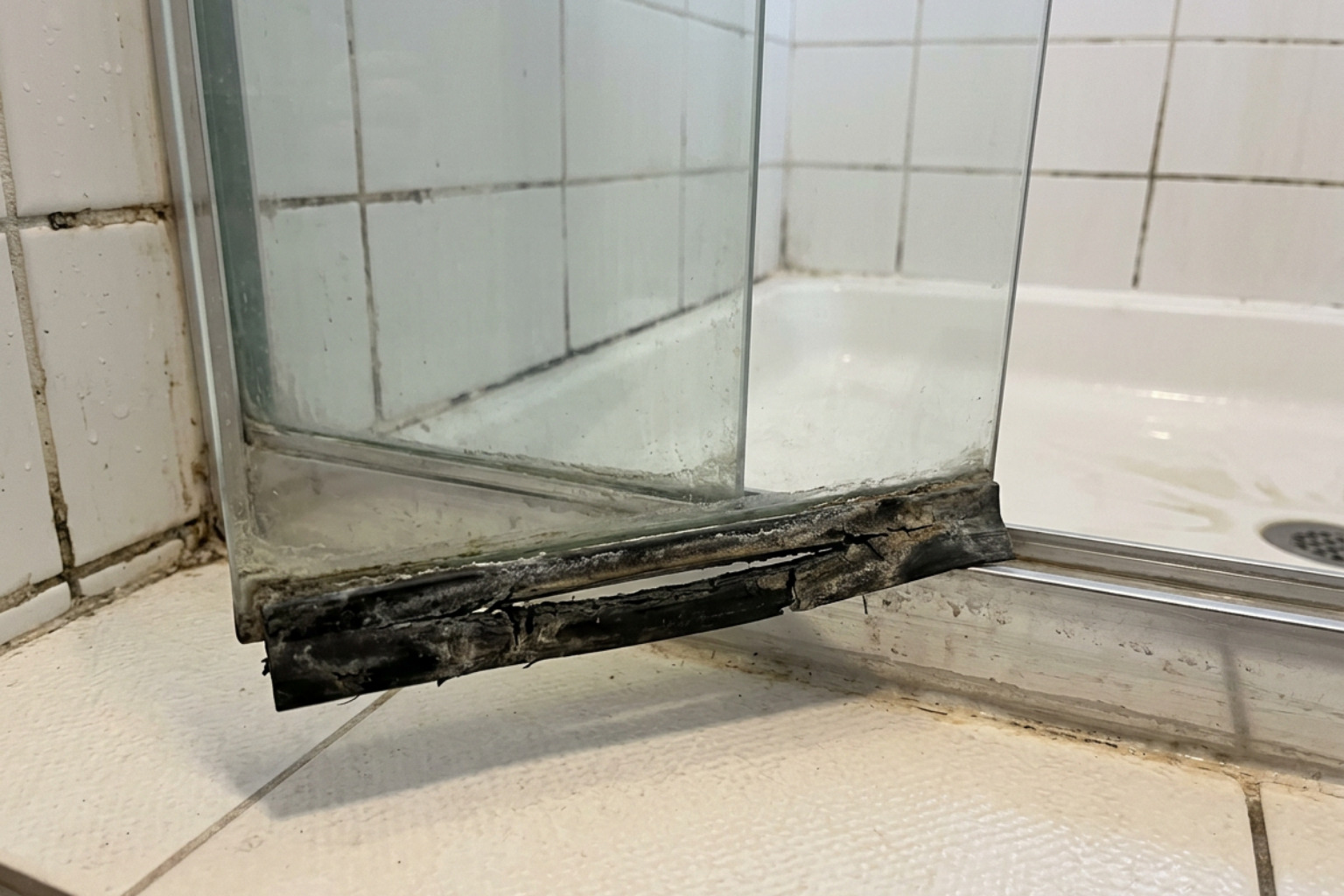
Clear vinyl sweeps, magnetic edge seals, and drip rails stop water from escaping onto your bathroom floor. In Florida’s warm, humid climate, these vinyl components gradually yellow, stiffen, and attract dark mold growth that cannot be scrubbed clean. When bottom sweeps harden, they lose flexibility, leaving gaps that allow runoff water to collect around your baseboards and subfloor.
Persistent Leaks and Drainage Issues
Water pooling outside your shower enclosure after every use signals an active problem. Leaking door enclosures often point to worn vinyl gaskets, misaligned doors, sagging hinges, or deteriorated caulking along wall channels. Left unaddressed, persistent leaks seep into adjacent drywall and surrounding tile work, creating concealed moisture issues. If you notice pooling water, exploring a professional shower door repair service or replacing deteriorated components will safeguard your surrounding walls and flooring.
Structural Instability or Scraping Doors
A frameless or heavy glass shower door should swing smoothly without dragging along the curb or binding against adjacent glass panels. If your door feels loose, catches on the threshold, or makes grinding sounds, the mounting hinges or wall anchors may have shifted. Heavy tempered panels require secure anchoring into solid wall studs. Any wobbling or improper hinge alignment is a clear sign that the assembly requires professional realignment or hardware updating.
Enclosure Styles and Glass Selection Options
When planning a shower glass replacement, understanding the structural formats and aesthetic styles available helps you narrow down the best choices for your bathroom layout and design goals.
Framed vs. Semi-Framed vs. Frameless Enclosures
Shower enclosures generally fall into three structural categories:
- Framed Enclosures: Heavy aluminum framing fully surrounds every glass panel and door edge. Because the metal frame provides structural support, these systems use thinner glass. They offer a traditional appearance and effective water containment.
- Semi-Frameless Enclosures: These designs feature metal framing around the perimeter of the opening and fixed side panels, but leave the swinging or sliding door edges un-framed. They strike an appealing balance between classic framing and modern openness.
- Frameless Enclosures: Frameless enclosures use minimal metal hardware, utilizing heavy structural glass supported by heavy-duty wall hinges and discreet clamps. This design creates an airy, modern aesthetic that highlights interior tile work and simplifies cleaning.
Structural Glass Thickness: 3/8-Inch vs. 1/2-Inch
The thickness of your replacement glass directly influences both its physical presence and structural performance:
- 3/8-Inch Heavy Glass: This is the industry standard for custom frameless shower systems. It offers excellent rigidity, structural strength, and smooth operation for swinging and sliding doors.
- 1/2-Inch Heavy Glass: Offering maximum weight and substantial feel, 1/2-inch glass provides extra rigidity. It is recommended for tall glass partitions exceeding typical height standards, or when a door hinges directly off an inline glass panel rather than a wall stud.
Glass Clarity and Texture Styles
The type of glass you choose dictates both privacy and color rendering within your space:
- Clear Float Glass: Standard clear glass features a natural iron oxide content. While looking clear when viewed straight on, standard clear glass displays a subtle greenish tint along its cut edges and across white or light-colored shower tile.
- Low-Iron Ultra-Clear Glass: Specially manufactured with reduced iron content, low-iron glass removes the greenish hue seen in standard glass. It achieves superior clarity and high light transmission, making white tile, light marble, and custom tile patterns appear vivid and true to color.
- Frosted and Patterned Privacy Glass: Acid-etched or sandblasted frosted glass diffuses light while blocking direct visibility, offering privacy without darkening the shower area. Patterned choices like rain glass or textured weaves add decorative visual depth and help disguise water spots between cleanings.
Factory-Applied Protective Coatings
Untreated glass is naturally porous at a microscopic level, allowing hard water minerals, soap scum, and oils to adhere to the surface. Selecting glass with a factory-applied protective hydrophobic coating seals these microscopic pores. Water forms tight beads and slides off quickly, reducing spot accumulation and extending clarity over time.
| Glass Option | Light Transmission & Clarity | Edge Appearance | Best Suited For | Maintenance Needs |
|---|---|---|---|---|
| Standard Clear Glass | Good clarity; mild green hue against light tiles | Greenish tone along cut edges | Darker tile backdrops, earth tones, and standard enclosures | Regular cleaning with squeegee and non-abrasive cleaner |
| Low-Iron Ultra-Clear | Exceptional transparency | Crystal-clear, neutral edge brilliance | Bright white tile, light marble, and high-end modern walk-in showers | Easy wipe-down; maximum visual pop |
| Frosted / Etched Glass | Translucent light diffusion with complete privacy | Soft, uniform matte edge | Shared family bathrooms and spaces requiring elevated privacy | Low maintenance; minimizes visible finger marks and water spots |
Replacing Glass Only vs. Full Unit Swaps
Homeowners often ask whether it is necessary to tear out an entire shower enclosure when only one panel is damaged or unsightly. In many situations, replacing only the glass is a practical and cost-efficient option.
When evaluating a glass-only replacement, we perform a thorough assessment of your existing enclosure hardware:
- Hardware Reusability: Precision brass hinges, wall clamps, and sliding tracks outlast individual glass panels. If your current hardware shows no corrosion, mechanical wear, or structural slop, new tempered panels can be custom fabricated to match your existing mounting points.
- Hinge Alignment and Weight Tolerances: Heavy frameless panels rely on exact hinge placement. When replacing glass, we ensure the new panel matches the precise cutout dimensions, notch locations, and thickness needed for seamless operation.
- Frame and Track Condition: On framed systems, we inspect metal channels for corrosion, heavy mineral buildup, or frame warping. If metal components remain sound, fresh glass panels along with updated vinyl gaskets can restore the unit completely.
- Gasket and Seal Replacement: Whenever new glass is installed into existing frames or hinges, replacing aged neoprene gaskets and clear vinyl seals is essential to ensure a tight grip and maintain a watertight barrier.
If you are wondering whether a partial update works for your space, evaluating the condition of your hinges and frame channels provides key insight into when preserving existing hardware makes economic sense.
Single Panel vs. Complete Enclosure Upgrades
Shower enclosures consist of individual glass components, each serving a distinct function within the overall design. Depending on your bathroom layout, you may need to replace a single section or completely upgrade the system.
- Fixed Splash Panels: Popular in modern walk-in designs, fixed splash screens mount securely to the wall and curb via clamps or slim u-channels. Replacing a damaged fixed screen is straightforward and avoids altering surrounding fixtures.
- Return Panels: Corner enclosures feature return panels joined at a ninety-degree angle to the door assembly. Replacing a return panel requires precise corner alignment to maintain structural stability.
- Sliding Glass Doors: Bypass sliding systems rely on top header tracks and bottom guide rollers. Upgrading sliding door panels involves matching track hanger cutouts and ensuring smooth horizontal tracking along the entire length of the tub or curb.
- Hinged Door Glass: Heavy glass doors require custom notch cutouts for heavy-duty hinges. When replacing a hinged door, precise vertical plumb alignment is necessary to allow clean swinging motion and tight magnetic sealing.
For custom configurations, exploring our range of custom glass shower doors allows you to select custom layout options suited to your bathroom dimensions.
Enclosure Upgrade Costs and Pricing Factors
Understanding what influences overall project costs helps you plan effectively without encountering unexpected budget surprises. Rather than relying on rigid online estimates, recognizing key pricing variables gives you a clearer picture of project value.
Key Factors Shaping Project Pricing
Several core elements dictate total project expenses:
- Enclosure Style: Framed enclosures require less glass thickness and lighter hardware, keeping overall material requirements modest. Semi-frameless and fully frameless heavy glass enclosures require thick structural glass, heavy-duty solid brass hardware, and precise fabrication techniques.
- Glass Thickness and Type: Standard 3/8-inch clear glass is the standard choice for frameless installations. Upgrading to 1/2-inch heavy glass, low-iron ultra-clear glass, or specialized privacy textures adjusts fabrication requirements and total material investments.
- Custom Fabrication and Out-of-Plumb Cutouts: Standard pre-cut retail glass panels only work on perfectly square, level openings. Real-world bathroom walls, tile seats, and curbs rarely sit perfectly plumb. Custom-fabricated shower glass is measured down to fractional tolerances, accommodating wall leans, out-of-level curbs, and knee wall notches seamlessly.
- Hardware Finish Selection: Premium hardware finishes such as matte black, brushed brass, oil-rubbed bronze, and polished nickel undergo specialized plating processes, which influence component costs compared to standard chrome.
- Safety Compliance: All replacement shower panels must meet strict safety guidelines verified by the Safety Glass Certification Council (SGCC) to ensure safety upon impact.
To gain deeper insights into how design decisions influence overall project scope, consult shower door replacement cost.
Professional Installation vs. Self-Installation Risks
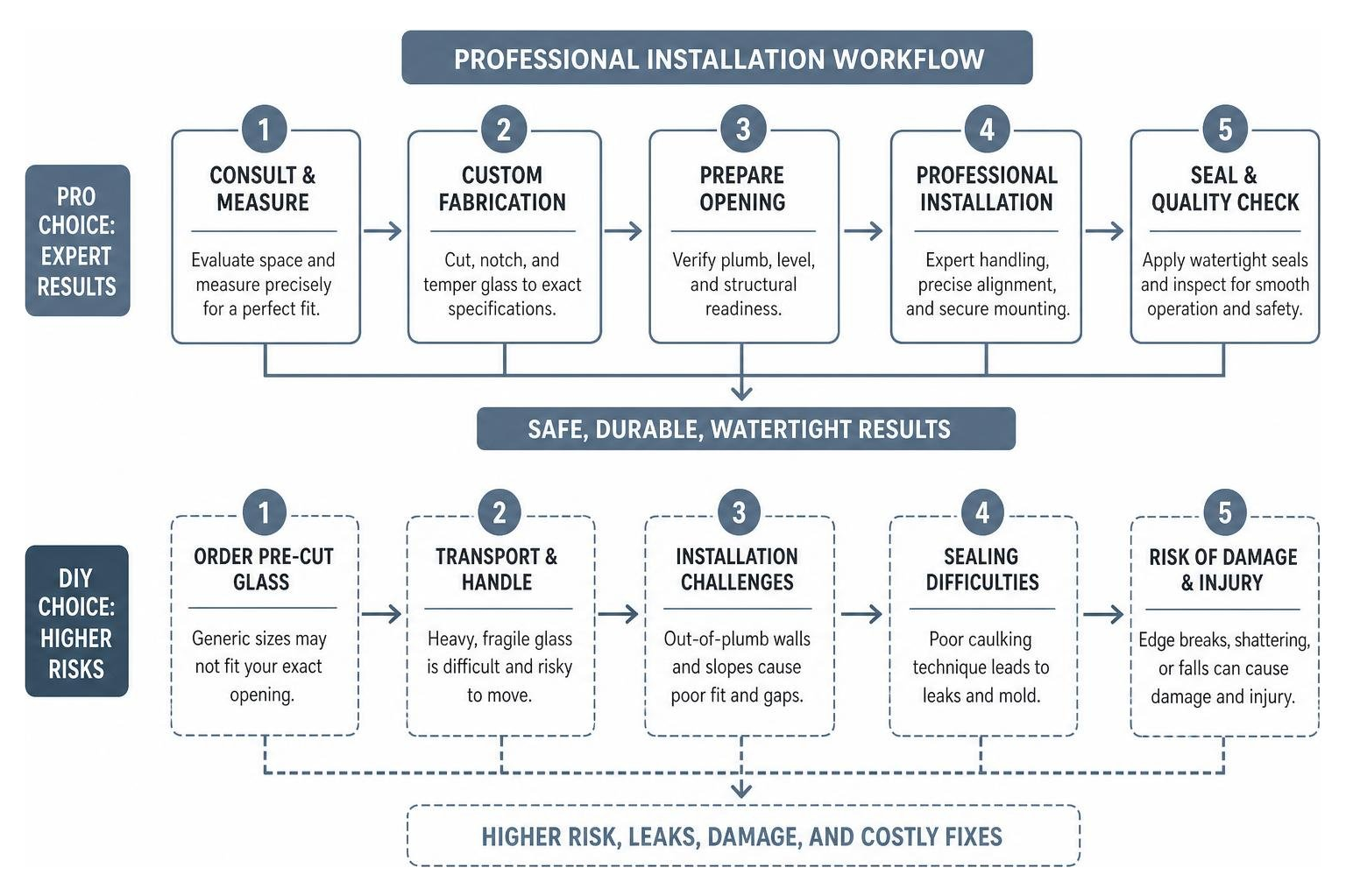
While direct-to-consumer pre-cut glass panels may appear tempting for self-installation, handling heavy tempered glass involves significant practical challenges and risks.
The Realities of Unassisted Glass Handling
- Extreme Fragility at Glass Edges: Tempered safety glass is exceptionally strong across its face, but extremely sensitive along its edges and corners. Minor contact between an unprotected glass corner and a hard tile floor can trigger instantaneous panel shattering.
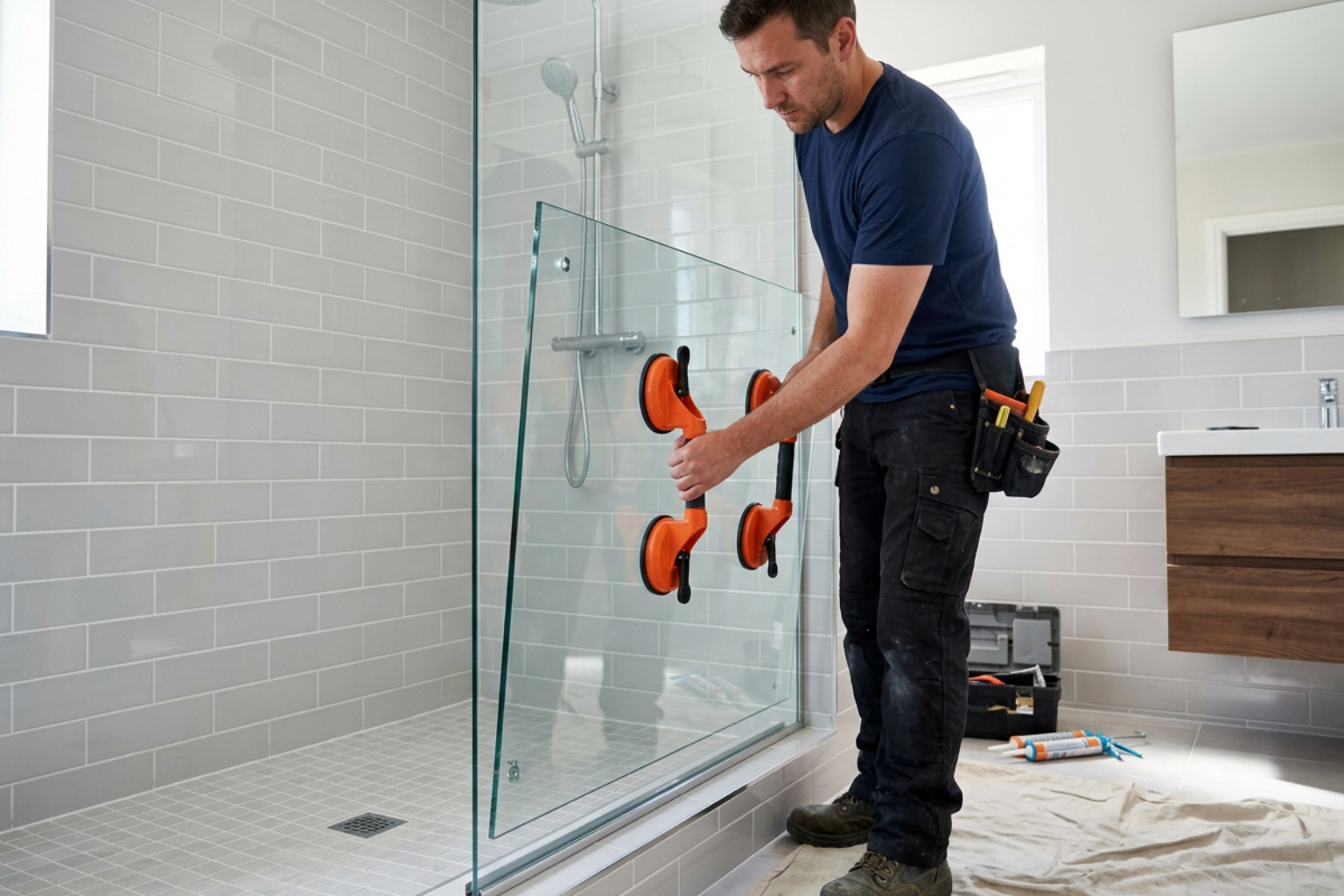
- Weight and Handling Limitations: A single 3/8-inch or 1/2-inch heavy glass panel frequently weighs between 70 and 120 pounds. Maneuvering heavy, slick glass panels inside confined bathroom spaces requires specialized glass suction lifters and experienced handling techniques.
- Out-of-Plumb Wall Challenges: Pre-cut off-the-shelf panels do not accommodate walls that lean or tile curbs that slope. Forcing standard square panels into out-of-plumb openings results in wide gaps, misaligned hinges, and permanent water leaks.
- Watertight Integrity and Caulking Skills: Achieving clean, durable silicone seals requires specialized surface preparation and steady application techniques. Poorly applied sealant leads to hidden water leaks and unsightly mold growth beneath the glass base.
The Professional Advantage
Working with an experienced glass contractor removes handling risks and guarantees precise execution. At The Glass Guy of Brevard, owner Michael Dombek personally oversees each step of the process. Backed by nearly two decades of local installation experience and our three-year parts and labor warranty, you gain complete peace of mind knowing your enclosure is installed right the first time.
Timeline for Professional Installation
Homeowners are often pleasantly surprised by how efficient professional glass replacement is once initial measurements are confirmed. Here is what you can expect during the replacement workflow:
- Step 1: Initial In-Home Consultation: We evaluate your existing shower opening, inspect wall framing integrity, discuss design preferences, and answer your questions.
- Step 2: Precision Site Measurement: Using specialized physical measurement tools, we record precise dimensions of your opening, taking into account wall plumb, curb level, and tile layout.
- Step 3: Custom Fabrication: Your measurements are sent for custom cutting, edge polishing, notch cutouts, and tempering. This custom fabrication phase ensures your glass fits your exact space.
- Step 4: Single-Visit Professional Installation: Once your custom glass is ready, our team completes the complete installation in a single visit, mounting hardware, setting panels, setting plumb alignment, and applying mildew-resistant silicone seals.
For a detailed look at complete installation services, visit our dedicated page on shower door installation.
Frequently Asked Questions About Shower Glass
How long does a glass replacement project take?
Once your custom glass panel fabrication is complete, the physical installation in your home typically takes between two and four hours. Single panel replacements or straightforward door swaps are often completed even faster. You will simply need to allow twenty-four hours for the specialized mildew-resistant silicone sealants to cure completely before turning on the water.
Can existing hinges and tracks be reused with new glass?
Yes, provided your existing hardware remains structurally sound, free of heavy corrosion, and mechanically smooth. During our initial site evaluation, we thoroughly inspect your existing hinges, handles, and tracks. If the metal components pass inspection, we custom order new tempered glass cut to match the precise thickness and cutout templates required by your original hardware.
How can homeowners control overall project expenses?
To keep project costs manageable without compromising quality, consider retaining sound existing metal hardware if it matches your aesthetic preferences. Choosing standard 3/8-inch clear tempered glass rather than specialized low-iron or heavily textured glass keeps material expenses lower. Additionally, opting for standard hardware finishes like polished chrome or brushed nickel offers excellent durability while staying budget-friendly.
Conclusion
Upgrading your shower enclosure with new glass transforms the light, feel, and daily comfort of your entire bathroom. Whether you are replacing a single chipped panel, resolving hard water damage, or converting an outdated framed tub enclosure into a sleek frameless shower, taking time to choose the right glass thickness, clarity style, and configuration ensures lasting satisfaction.
Precision matters most when working with heavy safety glass. Proper wall anchoring, exact out-of-plumb allowances, and flawless caulking protect your home against water damage while ensuring smooth, silent door operation every day.
At The Glass Guy of Brevard, we take pride in delivering top-tier craft, personalized owner-operated service, and honest advice across Brevard County, including Melbourne, West Melbourne, Viera, Rockledge, Palm Bay, Satellite Beach, Indialantic, Cocoa Beach, Merritt Island, and Titusville. Fully licensed in Brevard County and backed by nearly two decades of field experience and our exclusive three-year parts and labor warranty, owner Michael Dombek ensures every customer receives exceptional quality and attention to detail.
When you are ready to explore your replacement options, contact us for a free estimate and discover why local homeowners and remodeling professionals trust shower doors and enclosures installed professionally by our team.